How To Dress A Salad

oil and vinegar

No, I’m not talking about putting little shirts and pants on your lettuce leaves.  I’m not that weird.  Ok, yes I am but that is beside the point.  Salads are a great way to get in a ton of vegetables and there are endless varieties of salads.  Even with so many different combinations, people still find salads boring.  Their solution to fix boring salads is to top them off with dressings.  Don’t get me wrong, I love dressing and probably have consumed a mind boggling amount of ranch dressing.  Store bought dressings though are LOADED with chemicals and preservatives and a ton of other not good for you ingredients.  Go ahead and get that bottle of dressing out of the fridge and read the ingredient list.  I’m going to bet there are some things in there that you can’t pronounce.  That’s no good.  Fear not! You do not have to give your dressings, you just need to go about them in a different way.  Homemade dressing is super simple to make and so much better for you than store bought.  In fact, you probably have all the ingredients on hand to make your own simple dressing.  I’m going to show you how to make a simple dressing and give you a few variations so that you can make your own delicious salad dressing!

The basic components of a salad dressing are simple.  Oil and some kind of vinegar.  Your ratio of oil to vinegar can be made to your preference, but I tend to like a little bit more vinegar than oil in my dressing.  Now there are a variety of different oils that you can use to make your dressing beyond the obvious olive oil.  I also like avocado oil, flaxseed oil, and I have even tried walnut oil which was pretty tasty.  You want to stick with lighter tasting oils since you won’t be cooking the oil.  Oils like peanut, coconut, or palm oil will have a little bit stronger taste and could overpower the other flavors of the dressing.  Once you pick the type of oil you want to use you can pick a vinegar to go with it.  The three that I use the most are apple cider vinegar, balsamic vinegar, and white wine vinegar.  I’ve also made some dressings with rice vinegar.  There are many types of vinegars out there, so pick ones that you like the most.  Once you’ve chosen an oil and a vinegar, it’s time to add some seasonings.  The sky is the limit here so use your favorites or whatever you have on hand.

Ok, that is the bare bones of a homemade salad dressing.  Tasty for sure, but a little boring.  Good thing it is easy to come up with a variety of different dressings to top your salad.  The easiest way to make most of these dressings is to place all the ingredients in a jar and shake them up.  That way they are easy to store and you can add to them whenever you need to.  Some of the dressings I’m going to share need a blender or food processor, but I’ll make a note if they do.  Here are a few dressings that I have made myself:

  • 1/4 cup olive oil – 1/2 cup apple cider vinegar – 1 tsp oregano – 1 tsp basil – pepper to taste
  • 1/4 cup avocado oil – 1/3 cup rice vinegar – 2 tbsp lime juice – 1 tsp cilantro – 1/2 tsp garlic powder
  • 1/4 cup flaxseed oil – 1/3 cup white wine vinegar – 2 tsp italian seasonings – pepper to taste

These are quick and easy to make and will keep in your fridge for a few weeks.  Now, perhaps you are more a fan of creamy dressings (ranch lovers unite!) and these oil and vinegar combos are not doing it for you.  Not to worry, there are plenty of options when it comes to homemade creamy dressings.  These dressings will need to be made in a blender or food processor to get the right consistency.

  • 1/2 avocado, diced – 1/4 cup tahini – 3-4 tbsp lime juice – 1 tsp cilantro – 1 tsp chili powder – salt and pepper to taste
  • 1/2 cup smooth almond butter – 1/4 cup soy sauce or liquid aminos – 2 cloves garlic, minced – 1 tsp chinese five spice
  • 1/2 cup cashew cream – 1/4 cup smooth peanut butter – 2 cloves garlic – 1-2 tsp smoked paprika – salt and pepper to taste

You can also do a very simple herb and oil dressing.  Using 1/4 to 1/2 cup oil of your choice, blend in a few handfuls of your favorite herbs, and a few tbsp of mustard (I like spicy brown) until you have a pourable consistency.

There are so many options when it comes to homemade salad dressings.  Get creative and try making some of your own concoctions.  Use pureed beans to get a creamy, hummus like dressing or go super simple with just a little oil and vinegar.  Find flavors that you enjoy and will have you devouring salads by the plateful!  Remember, healthy doesn’t have to be hard or complicated.  More often than not, it’s better to just keep it simple!

Avocado and Corn Gazpacho

I’m going to be honest with you, I haven’t been the biggest fan of gazpacho in the past.  The idea of cold soup isn’t super appealing to me but this gazpacho has made me rethink my tastes.  The avocado adds a really nice creaminess and this dish is super refreshing on a hot summer night.  If you don’t like gazpacho, try this one out before you swear them off forever.


Avocado and Corn Gazpacho

DSC_0091


  • 1 ripe avocado
  • 2 tbsp lemon juice
  • 1 tbsp olive oil
  • 1/2 cup corn kernels (if using frozen let them thaw first)
  • 2 cups diced tomatoes
  • 2 cloves garlic, minced
  • 1 bunch scallions chopped
  • 1 3/4 vegetable broth or water
  • 2/3 cup almond milk
  • salt and pepper


1.  Peel and mash avocado with the lime juice, set aside

2.  Saute the corn, garlic, and half the chopped scallions for about 5 minutes.  The corn should have a little bit of char on it.

3.  Place the corn saute, and avocado into a blender and blend until smooth.  Add in the broth or water and almond milk and blend together.  Top with rest of scallions and salsa if desired.

You can serve this at room temperature or let it chill in the fridge for a few hours before serving.  The gazpacho improves with time so the next day it will taste even better!  Just a word of warning though, this soup will only last about a week before the avocado starts to turn brown.  So eat it as fast as possible, which shouldn’t be a problem!

Healthy and Helpful Kitchen Tips

I am a huge advocate for getting into the kitchen and preparing the majority of your meals yourself.  I think that one of the reasons so many people today are struggling with their health is that they have no clue how to make or prepare their own food so they rely on others (mainly restaurants and packaged food products) to do it for them.  Maybe you weren’t taught how to cook and the kitchen intimidates you or you do know how to cook you just think it’s boring and tedious.  Whatever the case may be, I have a few kitchen tips for you today that can help you in journey to be healthy.  Some of these were taught, some I’ve figured out along the way, and some I’ve picked up from places like the Food Network (thanks Alton Brown!).  Hopefully these tips will help you get over your fear of the kitchen or cut down the time that you spend prepping food so that you can get on with your day!


Kitchen Gear

  • Ever heard of a Silpat?  I hadn’t either until I was watching Iron Chef on Food Network.  It’s basically a thin silicon mat that you can use instead of aluminum foil or parchment paper.  The nice thing about the Silpat is that it’s non-stick and can handle fairly high heat, which makes it ideal for baking and roasting vegetables.  With the Silpat you can use less oil because you don’t have to worry about your food sticking to the pan, plus it’s reusable so you don’t have to keep replacing it.  I use mine almost every day.  It’s a great time and money saver!
My (slightly dirty) Silpat. Told you I use it every day!

My (slightly dirty) Silpat. Told you I use it every day!


  • Invest in a variety of sizes of glass storage containers.  I have a few different sizes of the pyrex brand and I use them all the time.  These are really helpful in terms of food prep as well as leftovers.  If you buy a bunch of fruit and vegetables at the store (which I highly encourage), you can come home and wash and cut them right away, then store them in your containers.  I like the glass kind because they last longer and are much sturdier than the plastic containers.  Also, storing your food in see through containers helps remind you of all the healthy prepared food you have in the fridge!


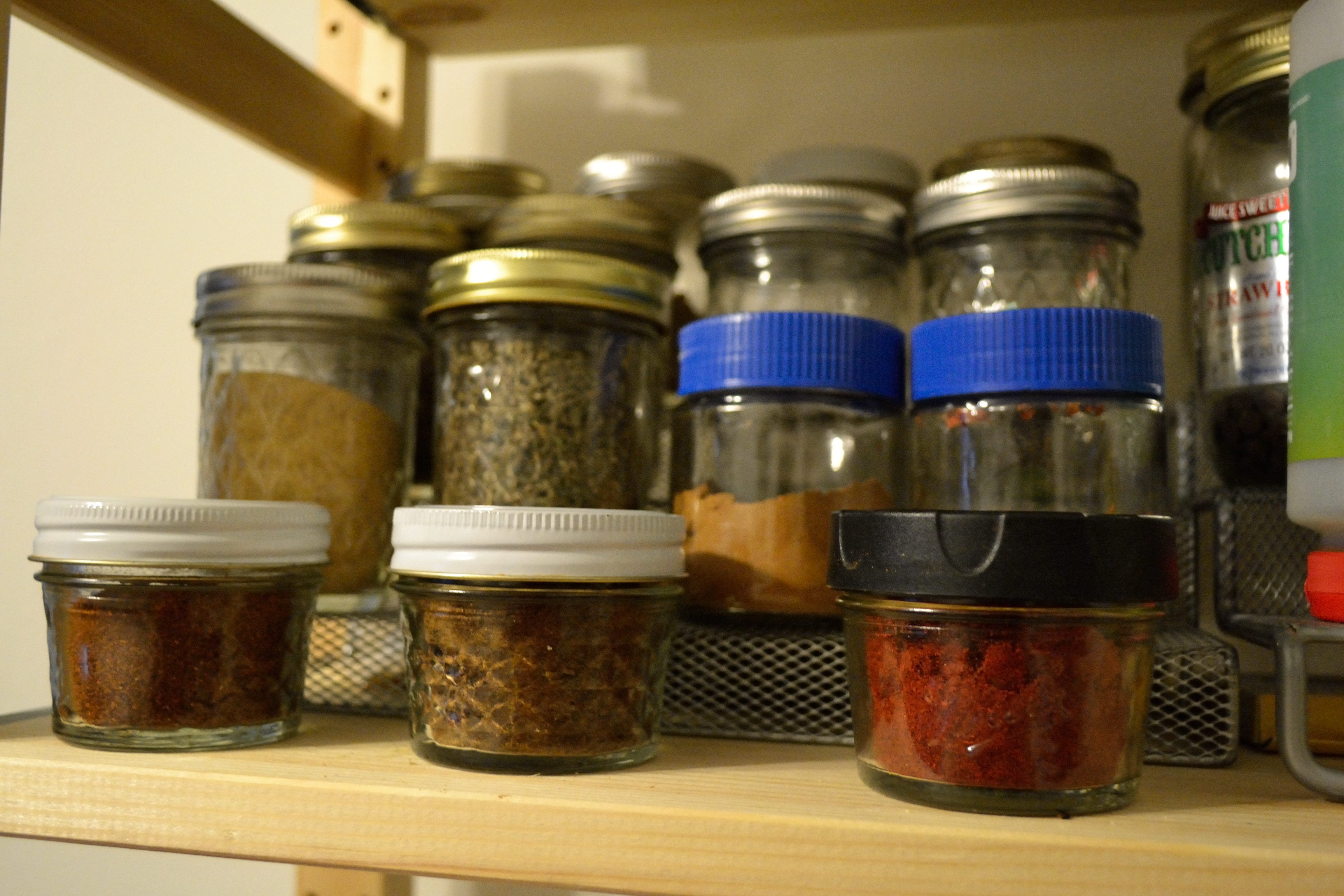
  • While we’re on the subject of glass containers, try storing your spices and grains in mason jars or other recycled glass jars.  If you buy this stuff in bulk it’s much easier (and prettier) store them in jars instead of the bags you use at the grocery store.  Plus once again, if you store your food in see through containers you’ll be much more likely to use them more often!

DSC_0115

My numerous glass jars. Great for storing grains and spices!

My numerous glass jars. Great for storing grains and spices!

  • Silicone spatulas are a great thing to have in the kitchen.  They are good for making scrambled eggs, scooping batter out of the bowl, and scraping up the last of the cookie dough.  I have a variety of shapes and sizes that I use all the time.  They are great because they are non stick, won’t scratch your pots or pans, and can function in a variety of situations.  Plus they’re fairly cheap, so stock up on a few.


  • Have a few different cutting boards instead of just one.  Once you start having a food prep day, you’ll be cutting, chopping, and dicing a variety of foods.  It’s nice to have a few cutting boards that you can rotate instead of having to wash the same one over and over again.  This makes food prep go faster and makes your cutting boards last longer.  I’m a fan of wooden cutting boards, but plastic or even silicone ones work just as well.


Cooking 

  • One of my favorite ways to prepare vegetables is to roast them in the oven.  Upside: this makes the vegetables taste amazing.  Downside: the vegetables have a tendency to stick to the pan (even using a Silpat).  At least mine did until I started preheating the roasting pan in the oven.  Think about it, whenever you cook something on the stovetop you heat the pan/oil up BEFORE you put the food in the pan.  Why not do the same thing with your roasting pan in the oven? A few minutes before you plan to put your vegetables or whatever else your roasting in the oven, place the pan in the preheated oven.  Then prep your food with whatever oil/spices you’re using.  Pull out the preheated pan and carefully spread your food out onto the pan.  You should hear that satisfying sizzle as the food hits the warm pan, just like on the stovetop!  This little trick (plus my Silpat) has helped cut down the amount of stuck vegetables on my pans!


  • I love dark leafy greens like collard greens or kale, but sometimes they can have a very bitter taste to them.  I can’t remember where I learned this but by soaking leafy greens in ice water for about an hour before cooking/eating them can cut down on the bitter taste.  Wash and cut your greens like normal then place them in a large bowl, cover with water, and add a few ice cubes.  Store this bowl in the fridge for an hour.  After the hour is up drain the greens and dry in a salad spinner or with some paper towels.  Prepare your greens however you like, sans the bitter taste!


  • For the longest time, I was afraid to use too much salt in my cooking.  The thing I was most worried about was consuming too much sodium like most of the U.S.  This resulted in under salting all my dishes, leaving them with a bland taste.  The problem with salt is that we’re consuming too much added sodium, mostly from packaged foods.  Once I got over my salt phobia and started adding the right amount to my dishes, everything started to taste a lot better.  Now I’m not saying go salt crazy and add heaps of it to every single piece of food, but salt naturally enhances the flavors of most dishes.  Using it properly can actually help you feel more satisfied.


Other Kitchen Tips

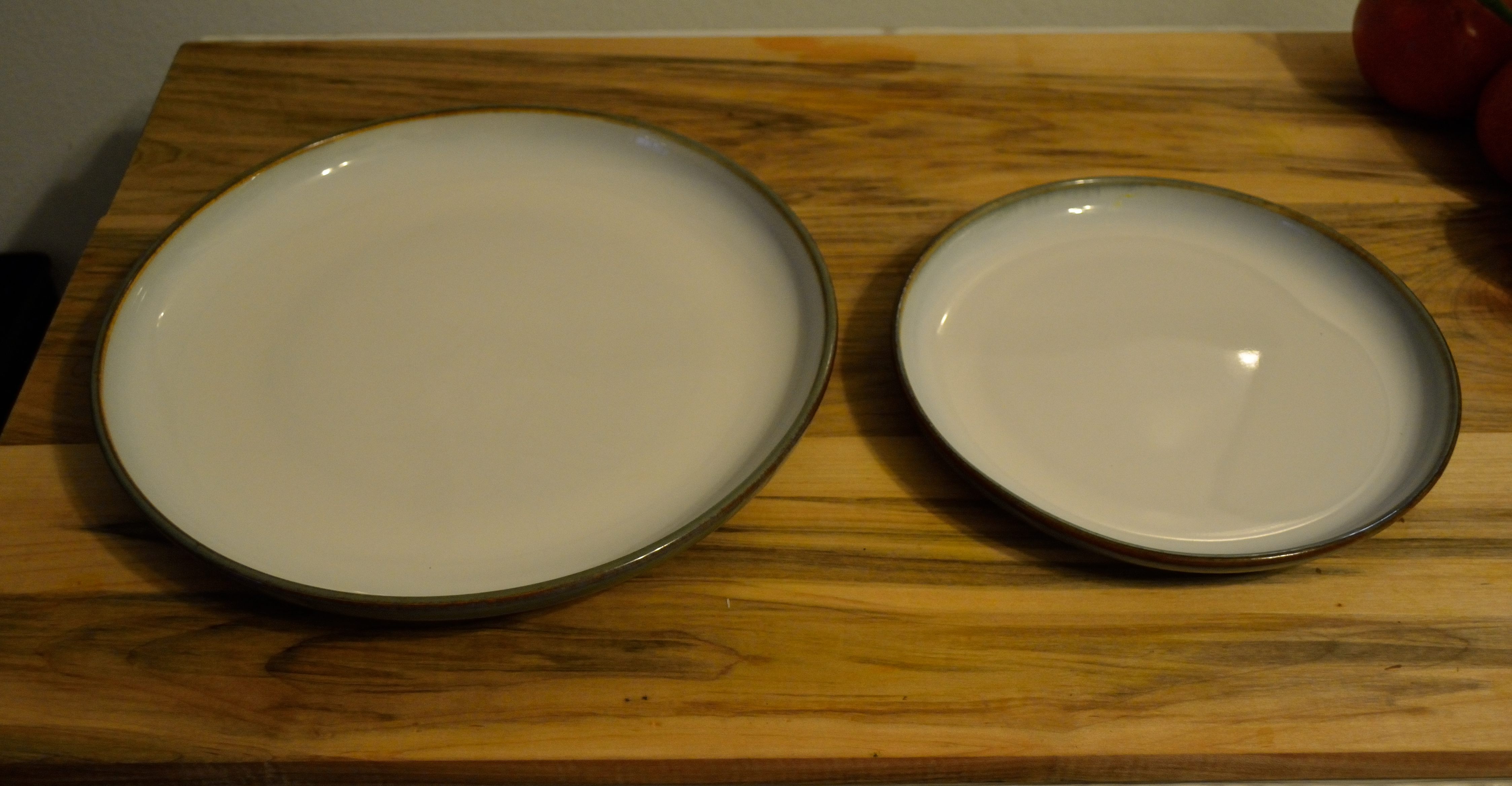
  • If one of the problems you have is overeating, try using smaller bowls or plates when you eat.  You can trick your brain into thinking that it is eating more food when in fact you are eating less.  When you have a big plate, the tendency is to fill that plate to the brim.  This means that portions are generally much bigger than they need to be.  Try eating off a smaller plate and you can cut down your portion sizes without feeling like you are depriving yourself.


Too big of a plate = too big portions. Try a smaller plate!

Too big of a plate = too big portions. Try a smaller plate!

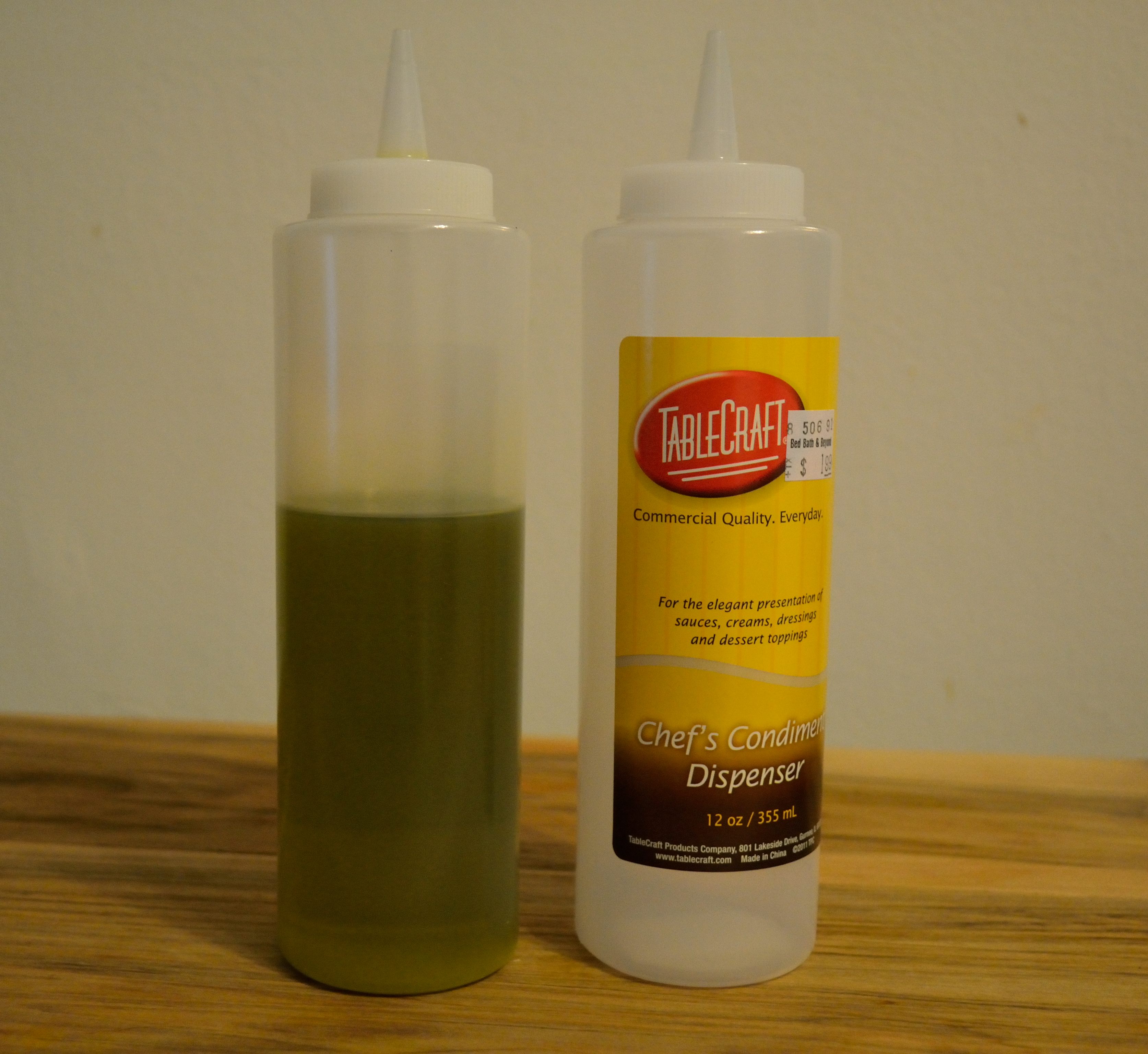
  • I just learned about this tip and it’s awesome.  Try using a condiment dispenser for your olive oil instead of just pouring it right out of the bottle.  This will cut down on the amount of oil that you use because you have better control of how much oil comes out.  Plus it will keep the bottle and your hands from getting oily because there won’t be any oil dripping down the side of the bottle!  You can find the condiment dispensers at Bed, Bath, and Beyond for $2.


Best discovery ever! Plus it's fun to squirt the oil into fun designs!

Best discovery ever! Plus it’s fun to squirt the oil into fun designs!

  • When using your cutting board on a slippery surface, like a granite counter, place a dish towel underneath it.  This will help keep the cutting board in place as you cut your food so you have less risk of cutting your finger off in the process.  Now that’s a good what I call a win-win!


These are a few tips that make my time in the kitchen a little easier and healthier.  What are some kitchen tips that you have learned along the way?  Have a great day and I’ll see you Friday with another recipe!


How To Shop A Farmer’s Market


DSC_0100

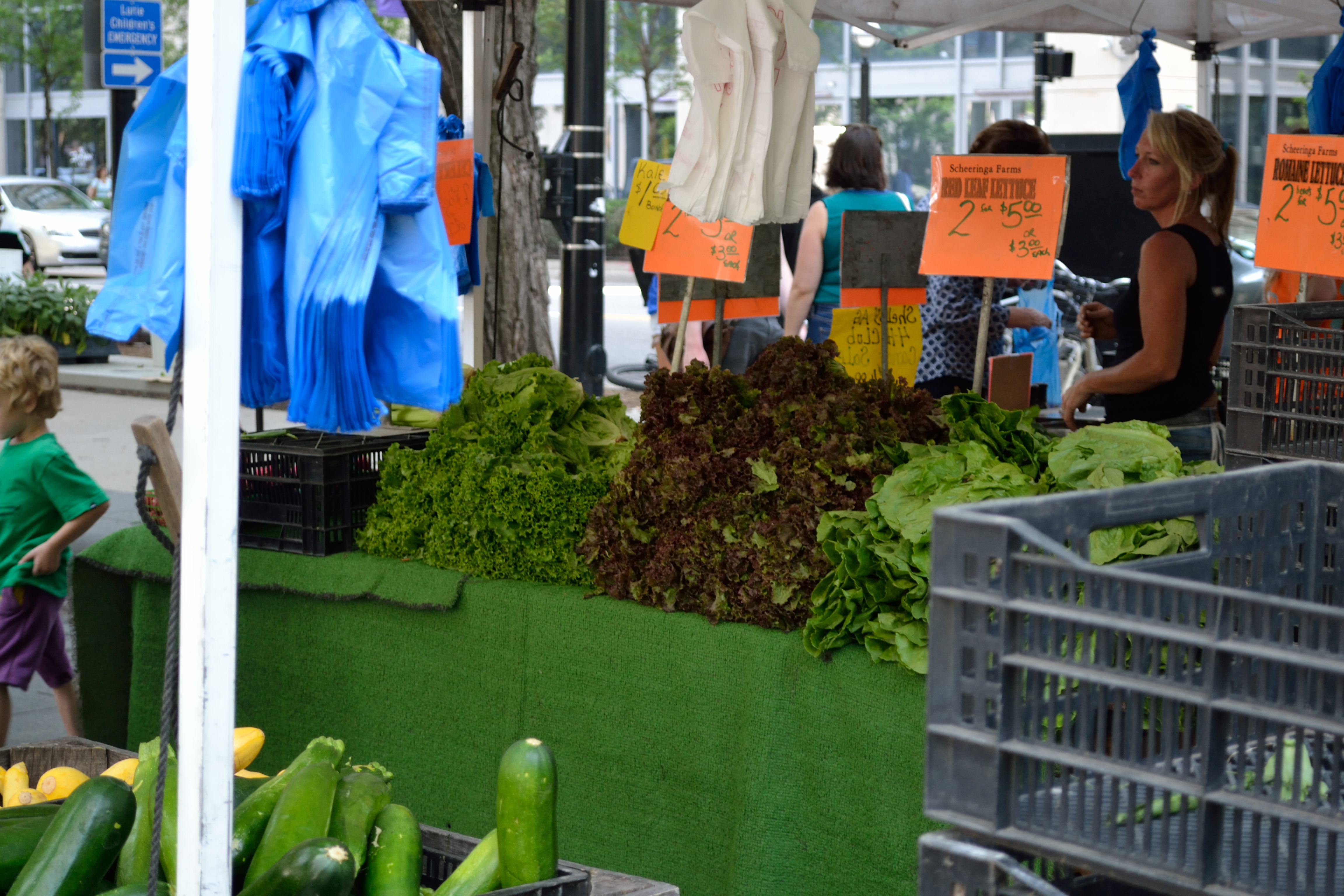
Summer time normally brings with it not just warm weather and trips to the beach, but the opening of the farmer’s market.  Farmer’s markets are great ways to buy fresh produce, support your local farms, and find some delicious new foods to try!  In this post, I thought that I would share a few tips on how to get the most out of your farmer’s market.  I’ve been to a few of the many markets open here in Chicago and even talked to a few of the farmers to find out how to make the most of your trip.


Walk the market.  Before you even buy anything, walk the whole market.  Many stands will sell the same fruits and vegetables but they might have different prices.  You don’t want to buy a pint of strawberries for $6 and then walk to the next stall and see they were only $4 there.  Also take your first walk through to inspect the quality of the produce.  Make sure that the produce being sold doesn’t look old, withered, or too beat up.  A little dirt is fine (these things grow in the ground after all!) but you don’t want it to look like it has been run over by a truck.  So make note of the stands selling good produce at good prices and make note of them.  Then come back after your walk through.

Ask questions.  The people running these stands have a wealth of knowledge of the products they are selling.  A lot of them have planted, watered, weeded, and harvested these fruits and vegetables themselves and know pretty much everything there is to know about them.  Don’t be afraid to ask how to prepare a certain vegetable or how to best store their fruit.  The farmers that I talked to were very excited and passionate about their foods and love to share their knowledge with the people buying their goods.  It’s nice to know exactly where your food comes from and exactly who is taking care of your food.  On the flip side, if the people at the stand know little to nothing about the things they are selling, maybe get your food at the next stand.  Also, if it is super busy at the stand that might not be the best time to ask for the history of radishes.  They are trying to sell their products and if they have to spend 30 minutes with each customer that won’t happen.

DSC_0104

Try to use cash.  I know that barely anyone carries cash with them on a regular basis, me included.  Most stands will accept debit/credit cards, but the process goes a lot quicker if you can pay in cash.  This is also a great way to budget yourself at the market.  If you set a limit of $20 and only bring that much with you, then you won’t over spend.  Again, if you forget to bring cash with you it’s not a huge deal.  Most places will gladly accept your debit/credit card.

Be creative.  Farmer’s markets are great in the way that they will usually sell fruits and vegetables that you might not find at your grocery store.  Try something new!  Ever heard of kohlrabi, daikon, or patty pan squash?  The market is a great place to find one new to you produce item and learn how to prepare it.  Soon you will be an aficionado at unique produce and have a lot of tasty go to recipes in your arsenal.  And remember, if you aren’t quite sure how to prepare a certain food, the farmer is a great resource.

DSC_0107

Still read the labels.  Most markets sell more than just fruit and vegetables.  There are bakery stands, jam stands, honey stands, butcher stands, and I’ve even seen a tamale stand.  Just because something is sold at a farmer’s market doesn’t automatically mean it’s organic or good for you.  Some stands sell products that have just as many chemicals and preservatives as the store bought kind.  Read your labels and ask if there is an ingredient you don’t know.  That being said, a lot of the stuff sold at the market are a much better choice than their grocery store counterpart.  Remember though, a cookie is still a cookie whether it’s organic and sold at the farmer’s market or not.

These are just a few tips to make your next trip to the farmer’s market a successful one.  I love being able to actually talk to the people who grow my food as well as learn from them.  Most of the time their passion for good food is contagious and I can’t wait to get home and make something with my purchases.  Find out where there is a market closest to you and check out all of the delicious and healthy food they have to offer!

Getting The Most Out of Your Food

088e84fa83509c302bf78aadffa995371

I don’t have a new recipe for you this Friday.  I am in the middle of recipe testing a few new ideas as well as learning how to take better food pictures.  No more iPhone pictures on this website!  I do, however, have some food related advice for you today.  How to get the most out of the food you buy, healthwise and moneywise.

I have talked before about eating well on a tight budget, but it is a subject that should be talked about again.  One of the biggest misconceptions that people have about eating healthy is that it is way too expensive.  This will keep some people from even trying to eat better because they think that they don’t have the funds to sustain a healthy lifestyle.  But have no fear, I am here to squash those misconceptions and show you that it is fairly easy and inexpensive to eat well on a budget.

Real talk: Adam and I have not had a paycheck come in for over a month.  We knew that this would happen, and we made sure to save and budget well in the months before this happened, but we still have had to be very conservative with our budget these past few weeks.  I take care of all the purchasing of food in our house and I have made some tweaks to make sure that we are still eating well along with not shelling out too much money.  It does take some planning but it isn’t impossible, so here are the ways that I have been keeping our grocery bill to a minimum.

Cook more meals.  Yup.  You need to get in the kitchen and get out of the restaurants when you are trying to save some money.  Adam and I rarely go out to eat and when we do, it’s usually to a place that we have a gift card or a coupon for.  It is much cheaper to plan your meals and cook them at home than to eat the same meals out at a restaurant for twice the cost.  Look around online, might I recommend this very blog, and find some recipes that you can handle and look tasty.  Learn to make a few healthy meals really well, then branch out from there and soon you will have a handful of meals that you can whip up in no time!

kitchenware

Keep it simple.  When looking for recipes to make, keep it simple!  Don’t pick a meal that will require you to purchase a bunch of ingredients that you will only use once or that cost a ton of money.  What I like to do when I am thinking of meal ideas is to take stock of my fridge and pantry and see what I can make from the ingredients that I already have.  That way I don’t have to go out and buy a bunch of extra things, just one or two that I might not have in my stock.  Plus by keeping your meals simple, you can really learn your way around the kitchen as well as keep your plate healthy!

Follow the sales.  Pretty much every grocery store will have sale items each week.  If a product you normally buy goes on sale, stock up.  I like to do this with canned foods, like diced tomatoes, but I also do it with fresh food.  A lot of fresh produce can be frozen so it doesn’t spoil before you use it.  Last week our grocery store had a sale on avocadoes (large Hass avocados for 99 cents!), so I stocked up.  When the avocadoes ripened, I cut them in half, removed the pit, wrapped each half in saran wrap, and then placed them all in a large freezer bag and stuck them in the freezer.  You can do that with a lot of fruits and vegetables, here is a great website that shows you how you can store a lot of fresh produce.  So keep an eye on sales, and when you can, stock up on those items.  Note, DON’T buy things just because they are on sale.  That will be a waste of money because you’ll end up buying products you don’t normally use, so you will have no idea how to use them and they will go to waste.  That isn’t very budget savvy now is it?

Check out your freezer aisle.  Speaking of frozen foods, check out your freezer section and see what they have to offer in terms of fruits and vegetables.  Frozen foods are just as healthy as their fresh counterparts and will cost less money.  Just make sure to read the labels on the fruits and vegetables to make sure that there is ONLY fruit and vegetable in the package.  The one time last week that I didn’t read labels on two bags of frozen vegetables, I got home to find out that one had added salt to their peas and another had add a preservative.  It was a doh! moment on my part and a great reminder to always read the ingredient list even on things as harmless as a bag of peas.  Also don’t even think about wasting money on frozen dinners.  Even if they say they are healthy and all natural, they are usually loaded with chemicals and preservatives.  Spend your hard earned cash on better food.

Use all of your food.  What I mean by this is don’t be so quick to toss out what you think isn’t edible.  This mostly goes for fresh vegetables.  Many people will throw away the stalks of vegetables like broccoli and cauliflower without even realizing that those are perfectly edible!  Cut up the broccoli stalks into bite size pieces and steam them along with the rest of the vegetable.  Or shred or grate the stalks into a salad.  Don’t throw away the tops of beets or other root vegetables.  Wash and cut up the leaves and use in a salad or saute them with some pepper and lemon juice.  You can even save scraps of onions, carrots, and garlic and make a homemade vegetable stock.  The point is, make sure you are using your food to it’s full potential.  You get more bang for your buck this way!

bulk

A few other quick tips:

  • Check to see if your grocery store offers discount days or refunds for using reusable bags
  • If a store near you has a bulk section, use it! Stock up on beans, grains, pasta, and even spices. Bulk items are much cheaper in the long run
  • Check online for coupons for products that you normally buy
  • Try to cut down on processed food products.  These may seem cheaper but they take a toll on your health and your wallet
  • Make a meal plan and list before you head to the store, that way you only buy the items you need and not whatever looks appealing

By taking just a little extra time and thought with your food as well as using some of these ideas, you should be able to minimize your grocery bill all while still maximizing your health.  Two pretty good things in my opinion!