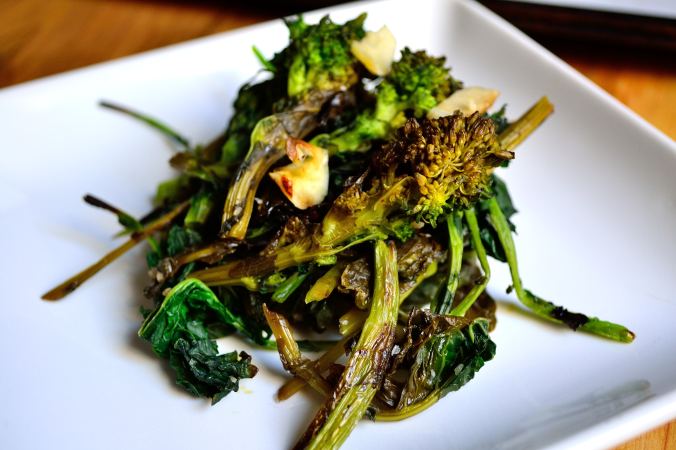
DIY Wednesday: Cauliflower Pizza Crust

DIY Wednesday: Cauliflower Crust Pizza | Life Healthfully LivedThe cauliflower pizza crust.  For many, it is an elusive dream.  You see recipes on Pinterest and they claim that it is the best crust ever (just like real pizza) and that will fulfill all your gluten-free pizza dreams.

And then you make it.

And it turns into a soggy wet pile.

Or it has five pounds of cheese and eggs holding it together.

I’ve tried a lot of cauliflower pizza crusts and while some were good, none were great.  Most of them had to be eaten with a fork and a knife and that’s ok if you’re eating a deep dish pizza but not ok when you want to pick up a slice and feel like you’re eating pizza.  That’s what I wanted.

Then I stumbled across Sprint 2 The Table’s quinoa flour crust pizza and it sounded simple enough and didn’t have the cheese that most crust recipes use to keep everything together.  So I gave it a shot and EUREKA!  It worked.  I could actually pick it up and while I won’t go as far as saying it tastes exactly like real pizza it was the closest I had ever come.

I kept playing with the crust and swapping out a few things and came up with one that doesn’t use eggs or grains as the flour.  If you’re totally fine with eating quinoa flour and eggs then go ahead and try Sprint 2 The Table’s pizza crust.  If you want an eggless and grain-free version try this one below.

I’ll give you a step-by-step tutorial (along with pictures) so you can get the best pizza crust possible then you can go crazy with toppings.  And I may have gone crazy with my toppings aka the whole refrigerator on my pizza.

Cauliflower Crust Pizza- Based on this one by Sprint 2 The TableDIY Wednesday: Cauliflower Crust Pizza | Life Healthfully Lived

  • 1 cup of cauliflower with as much of the stems removed as possible
  • 1/4 cup coconut flour
  • 3 tbsp ground flaxseed
  • 6 tbsp water
  • 1 tsp oregano
  • 1 tsp basil
  • 1/4 tsp red pepper flakes
  • 1/2 tsp salt
  1. Preheat your oven to 425 and get out a pizza stone/pan or regular baking sheet.  Line whatever you’re going to use with parchment paper (I used a pizza stone and cut my parchment paper into circles) and then cut another piece of parchment paper to match the first.
  2. In a small bowl, combine the ground flaxseed and water and let it sit and gel for a few minutes.
  3. In a blender or food processor, pulse the cauliflower a few times until it’s in small rice-like pieces and then dump it into a large bowl.  Add the flour and seasonings and whisk to combine everything.  It’s ok if it’s a little clumpy.
  4. Add in the flaxseed and water mixture and start stirring everything together with a spatula.  It should start to form a big dough ball.  If it’s too dry, add a little water a tablespoon at a time.  Remember that coconut flour likes to soak up water like a sponge so as you add water wait just a few minutes to see if it needs more.
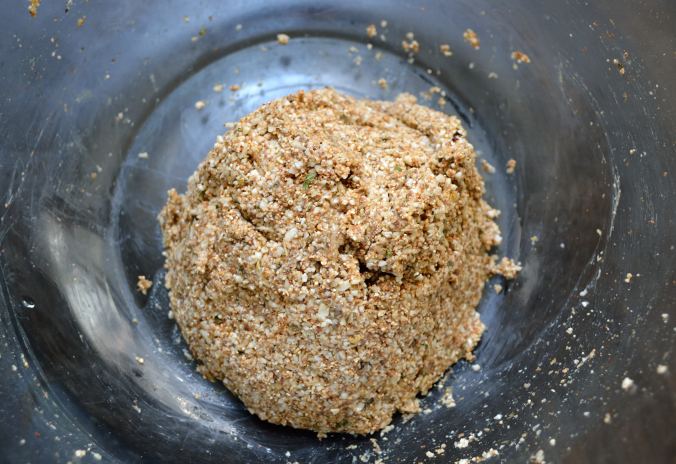
    DIY Wednesday: Cauliflower Crust Pizza | Life Healthfully Lived

    Nice dough ball. Not too dry or too soggy.

  5. Once you have your dough ball place it on your stone or pan that’s lined with parchment paper.  Slightly flatten the dough with your hand and then using a rubber spatula start pressing the dough out into a pizza shape.

    DIY Wednesday: Cauliflower Crust Pizza | Life Healthfully Lived

    Spreading out the dough. It takes awhile so don’t rush it

  6. Work from the middle pressing out and keep going until you have about a 10 to 12-inch circle.  You want it to be fairly thin so the crust will cook all the way through and not end up soggy.  As you press the dough out the edges might crack a little but that’s ok just press them back together.

    DIY Wednesday: Cauliflower Crust Pizza | Life Healthfully Lived

    About how thick you want your crust. You could even go a little thinner for a crispier crust.

  7. Place the other piece of parchment paper on top of the crust and bake for about 20 to 25 minutes.  Remove it from the oven.
  8. Ok, this is the slightly tricky part.  You’re going to flip the whole crust over.  What worked for me was putting on an oven mitt and then using the parchment paper to slide the middle part of the crust onto my hand and then flipping it over in a quick motion.  The crust should be mostly cooked at this point and if you rolled it out thin enough won’t break apart on you.  Don’t freak out, I’ve made this crust a dozen times and even if I totally botched the flip it hasn’t broken or ruined the crust.
  9. Once it’s flipped remove the parchment paper from the top of the crust and top with your favorite pizza toppings! Bake for another 5 minutes and enjoy!
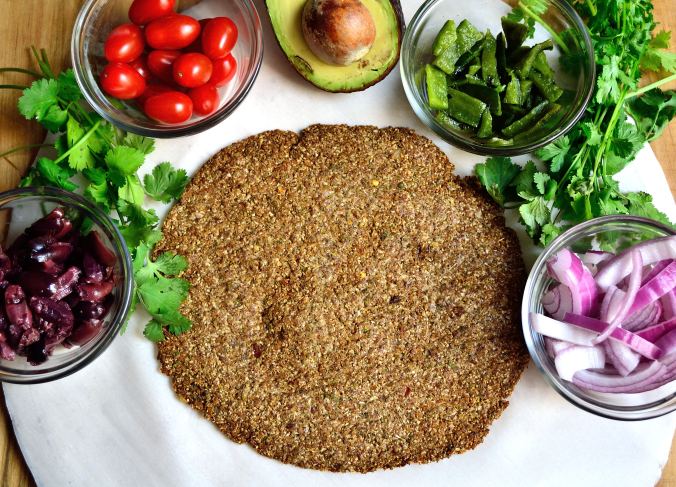
    DIY Wednesday: Cauliflower Crust Pizza | Life Healthfully Lived

    Ready for toppings!

A few other tips:

  • Don’t use a crazy amount of sauce because that is just going to turn the pizza to mush.  Trust me.  My favorite sauce so far has been a light layer of my spinach or cilantro pesto.
  • If you put on a lot of heavy toppings your pizza may fall a little bit as you pick it up.  If you don’t care and want all of the toppings go for it!
  • You can make this crust in advance and keep it in the fridge or freezer until you’re ready to use it.  I’ve only done it a few hours in advance so I can’t vouch for the quality after it’s been frozen and thawed but I will update this if I try it.
  • If you put onions or peppers on your pizza and you want them cooked a little more than the five minutes at the end, saute them before you top your pizza.  If not, they might be a little less done than some would prefer.
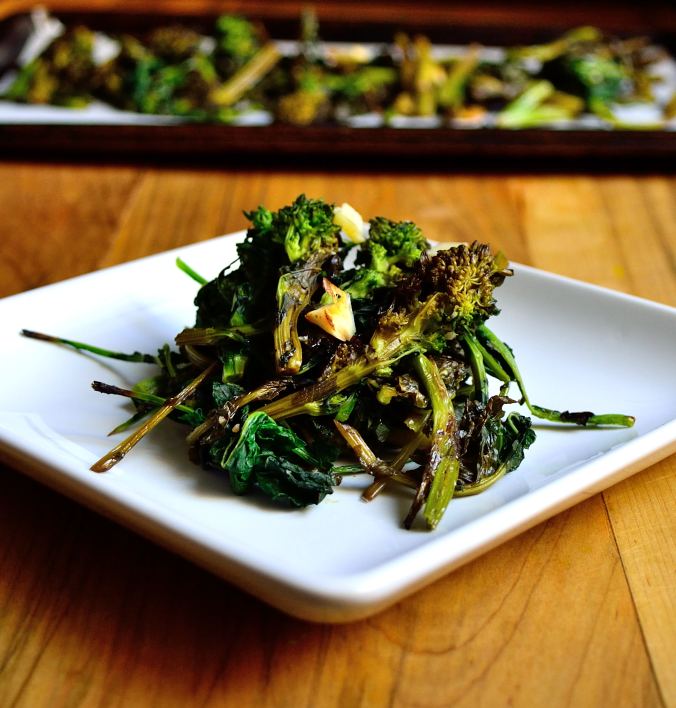
Balsamic Roasted Broccoli Rabe

Broccoli rabe is having a moment in the Dawson household right now.  Every time I go to the grocery store I just can’t pass up those bright green bunches.  I like the bitterness of the leaves and the slightly sweet broccoli, kind of like if kale and broccoli had a baby.Balsamic Roasted Broccoli Rabe | Life Healthfully Lived

That’s weird to imagine, so let’s move on.  I usually just blanch and saute broccoli rabe because I don’t mind the bitter but some people are turned off by that taste.  More rabe for me!  But in an effort to be a little less selfish with my food (a very tough feat, just ask my husband) I decided to try preparing it a little different.

Roasted.Balsamic Roasted Broccoli Rabe | Life Healthfully Lived

If you follow me on Instagram, you probably know that #roastallthethings is pretty much my favorite hashtag because I really do roast all the things.  Roasting brings out the natural sugars in food and in turn makes things like broccoli rabe more palatable for everyone.  The balsamic vinegar just ups the ante even more and adds a nice tang.

This is a simple side dish and after blanching it doesn’t take that much time.  In fact, you could blanch the broccoli rabe a few days in advance so all you have to do is throw the rabe into the oven when you’re ready to eat.  Easy peasy!

Balsamic Roasted Broccoli RabeBalsamic Roasted Broccoli Rabe | Life Healthfully Lived

  • 1 bunch broccoli rabe
  • 2 cloves garlic, thinly sliced
  • 1-2 shallots, finely diced
  • 1 tbsp coconut oil
  • 2 tbsp balsamic vinegar
  1. The first thing you need to do is blanch and shock the broccoli rabe.  This helps it keep it’s color and tames a little bit of the bitterness.  Separate the leaves from the broccoli stems, but don’t throw them away, and chop the broccoli part into bite size pieces.
  2. Bring a large pot of salted water to a boil.  Fill a large bowl with cold water and add a few ice cubes.  Have a colander ready.
  3. Once the water is boiling, dump the chopped broccoli pieces and stir around.  Cook for about 30 seconds to 1 minute until the water starts to come to a boil again.  With a slotted spoon, transfer the broccoli to the cold water bath and then drain in the strainer.  Repeat this process with the leaves.
  4. Once the broccoli rabe is blanched and shocked you can roast it right away or store it in the fridge for about 2 days before you’re ready to cook it.
  5. Preheat the oven to 400 and line a large tray with a Silpat or parchment paper.  Toss the broccoli and leaves in the coconut oil and then lay them out in an even layer on the baking sheet.  Sprinkle the shallots and garlic slices over them and then drizzle everything with the balsamic vinegar.  You can add a pinch of salt as well at this point.
  6. Roast for about 10 to 15 minutes, keeping a close eye so the broccoli rabe doesn’t burn.  Remove from the oven let cool slightly before serving.Balsamic Roasted Broccoli Rabe | Life Healthfully Lived


Weather & My Favorite Spring Vegetables

From the title you can probably gather, I don’t have a recipe for you today.  That isn’t to say I don’t have recipes, oh do I have recipes, they just aren’t quite ready for you yet.

But I didn’t want to leave you with nothing this fine Friday so I thought I would highlight some of my favorite spring vegetables that are starting to make their way to the produce section.  First, can we just talk about the weather?

Good.

In the span of about oh… an hour and a half, there has been rain, snow, rain/snow (or wintry mix if you like that better) and full on sun.  Now don’t get me wrong, I understand it’s spring in Chicago so I fully expect bi-polar weather but this is getting a little ridiculous.  I would like to wear my cute spring clothes now.  I would like to put my boots away for good.  I would like to not need five different coats for the weather in ONE DAY.Weather & My Favorite Spring Vegetables | Life Healthfully Lived

I mean, come on!  I married a meteorologist!  Shouldn’t he be able to fix this stuff?  But noooooo.  He gets all technical and scientific and tells me, “That’s not how this works Katie.”  Whatever.  I think he’s just being lazy.  With all his fancy degrees he should be able to make spring weather be better.  Especially for his loving and adoring wife who cooks him delicious meals and tries to make dessert for him most nights… I’m just sayin’

Ok, weather rant over on to my favorite veggies!Weather & My Favorite Spring Vegetables | Life Healthfully Lived

I know that most produce is available year-round so we’ve kind of lost the touch for eating seasonally.  But just because something is available year-round doesn’t mean we should eat it year-round.  Fruit and vegetables just taste so much better when they’re in season and they’re also cheaper.  Cheap tasty food is always going to be better than expensive bland food in my book.

CauliflowerWeather & My Favorite Spring Vegetables | Life Healthfully Lived

If you haven’t noticed lately, I’ve been kind of having a thing with cauliflower.  I turn it into rice, stuff taquitos with it, make mac n’ cheese with it, roast it, turn it into a creamy sauce…. It’s like a magic vegetable that can be anything and do anything.  It’s in peak season now, so pick up a few heads and make whatever you want.  Seriously.

Parsnips

These are technically in season from fall to the beginning of spring but during the winter months, they can be kind of puny and woody tasting.  I like spring parsnips cause they’re sweet and they taste amazing roasted.  You can also puree them and make a delicious mash or soup.  If you like carrots you’ll probably love parsnips.

SpinachWeather & My Favorite Spring Vegetables | Life Healthfully Lived

Give me green things!!! After winter, I’m always grabbing the greenest fresh produce I can.  Spinach (the ones in bunches that are covered with dirt, not in the plastic bags) start hitting the shelves and I can’t help but always grab a bunch.  I eat them raw in salads or wilt them a bit for soup or turn them into pesto or make lasagna with them.  No matter how you prepare them, a little salt, pepper, and lemon juice go a long way.

Leeks and OnionsWeather & My Favorite Spring Vegetables | Life Healthfully Lived

While I might not take a big bite out of a raw leek or onion, they enhance pretty much the flavor of anything you make.  Leeks are great in soup or stews and onions go in everything.  The spring varieties are a little sweeter and they are great caramelized.

Asparagus

Yes, your pee might smell funny but it’s worth it when you have roasted asparagus with a lemony cream sauce and pasta.  Even just roasted asparagus on its own is delicious.  And if you’re a meat-eater, my mom wraps two or three asparagus stalks with some prosciutto and roasts it and everyone goes nuts for it.

Watercress

Ok, so I have never tried watercress (that I know of) but it is like one of the top healthiest foods out there and it starts showing up in the spring.  I haven’t seen it on the shelves just yet, but I’m going to try some when I do find it.  It’s always good to try new fruits or vegetables that way you never get bored of your food!

So those are some of my top picks for spring plus one newbie that I want to try.  What are some of your favorite spring vegetables?

I hope you have an awesome weekend and that the weather by you isn’t as crazy as it is here!


Asian-Style Green Beans

Are Chinese buffets still a big thing?  I haven’t been to one in many years, but for a while when I was younger my family and I would go often.  It was just easier because everyone could get what they wanted and it was good for my notoriously picky sister because there were always a few things like pizza and chicken nuggets.  Which of course are Chinese.  Asian-Style Green Beans | Life Healthfully Lived

One of my favorite things at the buffet were the green beans.  They were crispy, crunchy, green, sweet, and salty.  They had those huge granules of salt and garlic and they balanced so well with the other flavors.  I would always get numerous helpings and could have easily made a meal of them.

Of course, they were probably SUPER high in sodium and flavorings that might not have been the best but when compared to the other offerings at the buffet (I’m looking at you General Tso’s chicken and crab rangoon) they were a pretty good choice.  The other day I had a hankering for those green beans and decided to make my own healthier version and I’m pleased to say I think I got pretty close!Asian-Style Green Beans | Life Healthfully Lived

Fresh green beans are making their way back into grocery stores so you should be able to find them pretty easily.  But if you can’t don’t worry, you can use frozen green beans too.  Give these green beans a try at your next meal and I guarantee your family will polish them off.  At least, my husband did….

Asian-Style Green BeansAsian-Style Green Beans | Life Healthfully Lived

  • 2 cups fresh green beans, ends trimmed (if using frozen make sure to thaw them first)
  • 3 cloves garlic, minced
  • 2 tsp dried onion flakes
  • 1 tsp powdered ginger
  • 1 to 2 tsp coarse sea salt (if you don’t have coarse that’s fine just adjust the amount so it’s not too salty)
  • 2 tbsp coconut aminos (you can use soy sauce or liquid aminos too)
  1. Heat a little oil in a large saute pan over medium-high heat.  Add the minced garlic and swirl everything around the pan a few times.
  2. Add the green beans to the pan and then add the onion flakes, ginger, and salt.  Stir so everything is mixed together.  Saute for 5 minutes.
  3. Pour the coconut aminos over the green beans, stir everything together, and cover.  Lower the heat to low and cook for another 2 minutes.

Pozole Rojo

IPozole Rojo | Life Healthfully Lived might be a weirdo (ok, I’m totally a weirdo) but I love to hear the history behind food and certain dishes.  So often our cultures and traditions are built around the food we serve.  Food can tell so many stories, like what was available back then, what types of jobs we were doing, if we were going through bad times or good times, or if we were celebrating a holiday.  I just really geek out over how certain dishes came to be.

A few weeks ago I was trying to figure out what kind of soup to make.  I wanted something new, but nothing too complicated.  I have no idea how I stumbled upon it, but I found a soup called pozole.  Pozole means hominy, which is a type of corn that has been treated with lime to soften the husk, and it is a traditional Mexican stew.  When I think of Mexico, stew is not what comes to mind first. Pozole Rojo | Life Healthfully Lived

After a little research, I found out that pozole had a ritual significance.  Maize, or corn, played a huge role in the lives and culture of Mexicans.  Ancient Americans believed that humans were made out of cornmeal by the gods.  In a traditional pozole, prisoners were killed and cooked with hominy and seasonings and then served to the whole community as a form of communion.  Once cannibalism was outlawed, pork was substituted for human because it tasted similar.

Aren’t you glad that I’m sharing this with you? Hungry yet?

Have no fear, I am not going to make this with human flesh (I’m not Sweeney Todd) and I’m not even going to make it with pork.  I decided to do a vegetable pozole and make it a pozole rojo by adding a mole sauce.  I did stick to the traditional hominy, which is really delicious and I had never had before, as well as traditional seasonings.

Pozole is still served today for celebrations like weddings, birthdays, and New Years.  But you can make this pozole rojo anytime and it’s a great way to warm up on a cold night.

Pozole RojoPozole Rojo | Life Healthfully Lived

  • 3 large dried ancho chiles
  • 2 large dried pasilla chiles
  • 2 cups hot water
  • 2 tbsp cocoa powder
  • 4 to 5 cloves garlic
  • 1 cup onion, diced
  • 1 can of hominy, 28 oz (read the ingredients to check for preservatives)
  • 6 cups vegetable broth
  • 1 tbsp Mexican oregano (regular would work too)
  • 3 tsp ground cumin
  • 1/2 tsp salt
  • 1 lime
  1. Get a large skillet and heat it over medium-high.  Toast the chiles until they are a little soft and bendy.  About 5 minutes.  Place the chiles in a large bowl and cover the chiles with hot water.  Let them sit for 15 to 20 minutes until they are totally soft.
  2. Once the chiles are totally rehydrated, take them out of the water and save the water.  Cut off the tops and remove the seeds and place into a blender.  Add the water they were soaked in, the cocoa powder, and the garlic cloves.  Blend until you have a smooth paste.
  3. Heat a Dutch oven or large soup pot over medium-high heat.  Add a little olive oil and saute the onions until they are soft, about 5 to 7 minutes.  Add in the hominy, cumin, and Mexican oregano and stir to combine everything.
  4. Pour in the vegetable broth and salt and bring everything to a boil.  Lower to a simmer and cook covered for 20 minutes. Taste and adjust any seasonings and squeeze in the lime juice.


I served this topped with guacamole, but you could also use cilantro, radishes, or even sour cream if you were so inclined.  If you want a more traditional pozole with pork, check out this recipe herePozole Rojo | Life Healthfully Lived

What are some of your favorite meals with some history?  Any dishes that your family has always made for a special occasion?