Being Different

For most of us, we like feeling like we fit in.  Most of us don’t like to feel like we are the lone wolf, although some of us do enjoy that.  People like to feel they are a part of a group in some way, whether that is a small group, like a reading club or band, or a large group, like whole cultures.  Not all of us like to be a part of the “mainstream” crowd, but I believe that we all do have a longing to fit in somewhere and in some way.

be you

It is rough being different from others, especially when it comes to eating.  Have you noticed how a lot of our culture is centered around food?  In the summer we have BBQ’s and cookouts, we roast marshmallows over campfires, and we go to state fairs where you can get pretty much any type of food fried and served on a stick.  Come fall time, we gear up for Thanksgiving where food is a central focus.  Then come the winter holidays and the parties and gatherings with cookies and candy canes, oh my!  Right when you don’t think you can put one more bite in your mouth, Easter rolls around and we’re all chowing down on chocolate bunnies and Cadbury eggs.  Even if you don’t take into account all the holidays where we eat, most of us meet up with friends and family at restaurants or some one’s house where they have cooked an elaborate feast.  Our culture is CENTERED around food, and that is alright.  Eating is one way we connect and share with others, and each culture has their own unique way of eating.

The problem is that the Standard American Diet (SAD) is not ideal and it isn’t making any of us healthier.  The bigger problem I want to address today is how for those of us who have chosen to eat in a way contrary to the SAD, it can be difficult for us to fit in.  I have experienced this many times and while it isn’t fun, I have learned how to deal with it and adapt, and want to share some of my tips and advice.   Hopefully it will help those of you trying to maintain a healthy lifestyle, as well as friendships and a social life.

Research and Prepare- Whenever you find that you are going to be in a situation that includes food, find out what type of food will be offered.  If you are going to a restaurant, many times they will have their menu’s posted online that you can view, or call them up and ask about their menu.  Check out what food they have and if they offer anything you can eat.  If not, call the restaurant and ask if there is any way that a menu item can be modified to fit your eating style.  Many times managers will be happy to work with you, especially if you take care of it in advance.  If you are going to a party at someone’s house, talk with the host and find out what will be served.  If there is nothing you can eat, offer to bring a dish to share that you can eat.  NEVER demand that they change their menu just for you.

Always be kind and gracious- Ever heard the phrase you attract more bees with honey than vinegar?  People will be much more willing to work with you and accommodate your needs if you approach them in a kind and gracious manner.  I know that I hate to be a burden on anyone.  I chose to eat a certain way, and it was not forced upon me.  Therefore, I don’t expect everyone to just bend to my will and provide me with everything I need.  People don’t like to be treated like short order cooks and they don’t want to be bossed around by you.

Be patient- Don’t expect everyone to understand your eating style immediately.  It has taken you a long time to find the right way to eat for your body, so don’t expect others to get it the first time either.  If you’re a vegetarian, don’t get frustrated if people are always asking you if you can eat this or that.  If you have Celiac’s, try to stay calm when someone asks for the umpteenth time if something has gluten in it.  Many times, people really are trying to be kind and learn what you can or can not have, and they are not trying to get you riled up.  This was the thing that I struggled with the most, and I still do.  When I first changed the way I ate, everyone was constantly asking me, “Can you eat this? Can you eat this? How about this?”  I just wanted them to leave me alone and stop putting their focus on how I ate.  Now I just take a deep breath, and realize they are just trying to make sure I am taken care of.

Seriously. Don't be that guy...

Seriously. Don’t be that guy…

Don’t lecture- This is not the time to start lecturing people about how their diet is awful.  This is not the time to become egotistical and think that your way of eating is far superior to others.  Instead, think of this as a chance to enjoy other’s company and possibly educate them about how you eat.  If someone approaches you and asks about how you eat, by all means tell them.  Tell them how you have been trying to find the best way to eat for your body and your health and answer any questions that they might have and then move on.  Don’t shove your beliefs in their face unasked and don’t judge them.  Remember, you have no idea what their story is.

Enjoy yourself- This is another area that I struggled with, but I am getting better at.  At family functions I would get so exhausted and frustrated with everyone asking what I would be eating, that I would never enjoy myself.  I felt like everyone was watching me and judging the way I ate.  I missed out on a lot of fun times by constantly getting flustered at events where there was food.  Now I try to move the focus away from me and food and onto the people around me and the memories being made.  I don’t worry about what others think, because I know that I feel healthier than I ever have.  Instead of feeling overwhelmed, take a deep breath and really keep yourself in the moment.  You will remember the good times you had far longer than you will remember the food served at an event.

It is hard to eat different from the majority of the population.  You can feel like a pretentious weirdo or burden.  You can feel like it isn’t worth it to be different from everyone else, and that it would just be easier to blend in when it comes to food.  When you start feeling that way, remember why you started on this journey in the first place.  You wanted to get healthier, you wanted to feel better, you wanted to live in the best possible way that you could.  For me, I always remember that not only do I want to be healthier, I want to help others be healthier too.  You won’t always see eye to eye with others about food (or any topic for that matter) and sometimes it will be difficult.  I promise you, it is all worth it!

wekosh-image-quote-be-happy-be-healthy-be-awesome

Judge Not Lest Ye Be Judged….

judgementquotes

I like to think of myself as a non-judgemental person. I am a very accepting and open person. I feel that I am pretty empathetic and can easily put myself in others shoes or at the very least try to see things from their perspective.  Imagine my surprise then when I realized I judge people constantly.  Allow me to explain.

This past week I have read a couple of blog posts that really made me think of how I make snap judgments whenever I pass someone on the street.  The first post was sent to me by husband, and it was about how poor people grocery shop.  After reading this, I thought about how many times I have been shopping at the grocery store and seen someone else loading up on junk or unhealthy food.  I have always thought to myself, “There are so many better options, I wish I/someone could teach them how to be healthier.”  In my mind I felt that thinking that was not very judgmental, but that post made me realize it really is.  I have no idea where this other person is in their life.  I have no idea about their life story.  I have no idea what has led them to this place/time/moment.  How unfair of me to condemn their eating habits without knowing the full details.  One of my main goals is to help people find their healthiest self, no matter what may be going on in their lives.  There is no way I can do that by making snap judgments in the grocery store check-out line.

The second post that got me thinking about how judgmental I am was this one by OliveToRun.   She talks about another runner she passed a couple of times on her long run and how later she thought about how she would have never guessed he was a runner by the way he looked.  Thinking about this, I realized I do the exact same thing.  Maybe it’s because I am a runner, whenever I pass people while running I sub-consciously think to myself, “Runner, runner, not a runner, could be a runner, nope, runner, runner….”  I never really pay attention to this habit, but boy, what an awful habit.  I hate it when people look at me and decide what I can or can’t do based on my appearance.  “Well she is tiny, she probably can’t lift very much weight” or “Obviously she is a runner, look at her legs”.  These things have been said to my face or in my general vicinity and they always irk me.  Since when has the way someone looks contributed to what they are able to accomplish?  Yet here I am doing the same thing to other people.  It may not be out loud or to their face, but I am still not giving them the benefit of the doubt and judging them on what I think they can do based purely on appearances.  When I first started running, I in no way looked like a “typical” runner.  I was slow, I could barely huff and puff my way through one mile, and I am sure other people would never have guessed that I was training for a 5K.  In my heart and mind though I was still a runner, I was logging the miles and doing the work and I counted myself in the community of runners.  Everyone out there pounding the pavement, no matter what they look like, deserves that honor.

Let’s face it, we all are judgmental sometimes.  Whether we like to admit it or not, we make snap judgments and place people into categories.  In 2001, the International Journal of Obesity published a study about how the weight of a patient significantly affected the attitude of the physician attending.  They found that while physicians would order more health tests for overweight patients, they would spend significantly less time with them and they viewed them more negatively than normal weight patients.  This is one of the reasons why obesity is such a huge problem.  We are quick to judge overweight or obese people and blame them for their problems and we don’t try to offer help or find out what is really going on.  How can we expect to help them when doctors’ spend less time with them and view them in a negative light?  Who are they suppose to look to for help when people passing them look down on them because of their weight without knowing the full breadth of the issue?  Will the AMA recognition that obesity is a disease help or hurt this issue?  Only time will tell on that one, but I remain hopeful that we can step out of our judgmental boxes and start to turn things around.

chart3

I know that this problem will never be fully fixed; there will always be people out there that will judge others no matter what.  I know  that I can start to work on myself and learn to look past a person’s food decisions or appearance.  If I want to help others reach their optimum health, I have to meet them where they are and work with them and not against them.  I really disliked when people made judgments at the beginning of my journey to better health and I dislike when people make comments about my abilities based on what I look like now.  I do not want anyone to feel that way, and I really do not want them to feel that way because of my thoughts, words or actions.  Instead, we should all work a little harder every day to give people the help and care they deserve and not pass judgments based on appearances.

65932_20130215_093210_v

Forcing the Healthy Agenda, Maybe Not the Best

This holiday weekend my husband, Adam and I, spent the weekend at Lake Webster in Indiana.  We had a great time relaxing, spending time with family, getting out on the water in the boat/jet ski, and eating delicious food!  Obviously one of my favorite parts of the weekend was cooking delicious meals for the whole family and then enjoying the company while feasting!  Because we were out in the good old Midwest, we had to stop at a farm stand to pick up some sweet corn and other delicious produce like watermelon.  On a farm stand run, I noticed that there was a sign that said they accepted SNAP money.  For those of you who don’t know SNAP stands for Supplemental Nutrition Assistance Program, aka Food Stamps.  I was pleasantly surprised to discover that people who are enrolled in SNAP could purchase fresh local produce at a farm stand.  It made me think about the controversy that is going on with SNAP right now.

farm20market

There has been an ongoing debate over allowing the government to dictate what people can purchase using SNAP.  Some believe that the government should not allow those enrolled in SNAP to purchase unhealthy food with their money.  Others say that the government has no right to tell people what they should or should not eat.  This is not just a debate going on over food stamps either.  Remember a few months back when Mayor Bloomberg of NYC tried to get a citywide ban on purchasing soda over 16 oz?  The bill was shot down in court and never made it through.  These types of debates pop up all the time and have for a long time.  Seeing the current back and forth over SNAP though got me thinking, what was my stance on the issue?

You might think that this would be a simple issue for me.  I write a health blog and firmly believe in a healthy life for ALL people, whether they utilize food stamps or not.  You might think that I would side with those who believe that the government should restrict purchases on junk food.  My beliefs are a little more complex than that: I believe in educatio, not mandates.  Let me explain.  I don’t like the idea of people enrolled in SNAP spending money on unhealthy food choices.  I personally don’t buy junk food, so I don’t like that government money (aka my tax dollars) goes towards helping others buy junk food.

That being said, I do NOT believe that we should tell people what they can and can not purchase/eat.  They are adults and should have the freedom to buy what they want to eat, just like those not enrolled in SNAP can choose what to eat.  That is one of the pros (and sometimes cons) of living in a free country with free choice.  You are able to decide how you want to eat and no one can tell you otherwise.  How unfair and hypocritical to not allow this same freedom to those who might not be able to afford to eat without the assistance of SNAP.  Again, I firmly believe that every single person should have access to a healthy lifestyle, no matter socioeconomic status, race, religion, or gender.

I understand that not everyone in SNAP has access to healthy food.  There are food deserts, areas that do no have access to fresh, healthy, and affordable food,  all over the country.  These areas usually have to rely on convenience stores or fast food restaurants for the bulk of their diet.  I also know that forcing someone to eat healthy food when they don’t want to is a good way to turn them away from eating a healthy diet.  I prefer my belief in educating people about healthy lifestyles.  I think that we need to teach people how to live a healthy lifestyle with the tools and resources they have access to, because I am not into forcing people to do something, even if that is learning how to live healthier. I propose that those who enroll in SNAP take one mandatory class that shows the basics of living healthy.  After that one class, they can go on their merry way and do whatever they want with their food decisions.  After that one class though, SNAP should offer other classes and resources that people can choose to participate in and will help them further their knowledge of leading a healthy lifestyle.  This way, you can give every single person in SNAP some tools to utilize through the one class, but then only those who are truly interested can further their knowledge with cooking classes or learning how to eat healthy on a budget or guided trips to local grocery stores.

Is this a perfect plan?  Of course not.  Obviously these classes would have to be funded in some way, and most likely that would mean through tax dollars.  While everyone might not be so enthusiastic about their money going towards this, I would much rather have my money fund education than stocking convenience stores with more chips and soda.  I think that this can be a step in the right direction and I also believe that there are groups and organizations out there that are making great strides towards bettering SNAP.  SNAP to Health! is a great website that has tons of information about programs and resources and other tidbits about what people can do help further the health and nutrition of the USA.  I urge you to check out the site and see what you can do in your area to help out.  I know that promoting better health for all can seem like a losing battle.  It takes a bunch of tiny steps that may not look like they are doing anything to help, but every little step counts.  I believe that the more people we can educate and get on board with leading a healthier life, the faster we can reach the goal.  Your health is one of your most important assets; fight for better health and fight to help others reach that very same goal!

The Pitfalls of Advertising…even the good stuff

It shouldn’t come as a surprise that advertising companies know exactly how to reel in consumers, that’s their job. They compile loads of data and research and conduct numerous studies just to find out what makes the general population tick. They want to know EXACTLY what will make you personally buy their product, and they are good at their jobs. The food industry is huge, and marketing strategies are common practice, but what are the effects of all this food advertising?

chart

Children’s Exposure to Food Advertising on TV

chart2

Children’s Exposure to PSA on Fitness or Nutrition


Because the food industry and advertisers are smart, they know that their easiest, and most vulnerable, targets are children. If you have ever watched cartoons on a Saturday morning (admit it, you still do), every single commercial is selling something to kids and many of those commercials are selling food. A 2007 study conducted by the Kaiser Family Foundation found that children in the 2 to 7 age bracket will see 12 food related commercials per day. That would translate to about 30 hours and 4,427 food ads in one year. As children get older, the amount of food ads increases. I don’t know about you but the fact that a child as young as 2 years old is already being exposed to a barrage of food commercials is a little shocking. Not as surprising is the amount of junk food commercials compared to the amount of healthier food commercials, which is about 76% junk and 5% healthy.

The problem with all these commercials for food being aimed directly at children is that kids have a very hard time grasping the concept of advertising.  They just do not have the cognitive capacity to understand that they are being sold a product and very young kids can’t even determine the difference between a TV show and a commercial.  What’s more is that their favorite characters or celebrities are in these advertisements trying to get them (or more accurately their parents) to buy the product.  What kid doesn’t want to eat mac and cheese shaped as their favorite cartoon character?  Already at a young age these advertisements are setting up unhealthy eating habits.  In this 2009 health study on TV viewing and food consumption, researchers found that children eat 45% more food when exposed to food advertising.  These habits lead into adulthood as this study also found that adults consumed more as well after exposure to food advertising.

fat-kid-eating-chips-watching-tv

I can see you thinking to yourself, “Well there is an easy fix to this, why don’t we just start marketing healthier food?”  That would seem like the most logical answer, but this has its pitfalls as well.  When the healthier food companies start using the same tactics as the junk food people, say using a popular character to advertise their product,  they are influencing children to buy their product because their favorite character is selling it, not because they actually want the food in the commercial.  It is important to help children make food choices based on their own needs, such as hunger or good nutrition, not because Ronald McDonald is telling them to.  Building a healthy relationship with food at a young age is important because those skills will carry on into adulthood and educate children on how to make healthy choices and take care of themselves.

I know it can seem like an overwhelming task for parents to fight against the millions of advertisements that are constantly being shown to their children.  Heck, it’s hard for adults to navigate their own food choices when it comes to advertising.  Here are a few ideas to try out (for both kids and adults) when it comes to not being swayed by food advertisements.

1. Stop and decide if you are actually hungry.  You just saw a commercial for a Dorito Taco at Taco Bell when, suddenly, you REALLY want a taco.  Or maybe your child has come running at you telling you they NEED to have a happy meal even though they just had breakfast 2 minutes ago.  Before you drive to Taco Bell or rush out to get a happy meal for your tot, take a second and stop.  Are you really hungry? When was the last time you ate? What about the commercial was appealing to you? Taking the time to really evaluate why you want food will cut the chance of you eating just for the sake of the advertisement.  Talking through these questions with your child can help them start to learn how to make proper food choices, such as eating when they are actually hungry versus eating because they just saw food on TV.

2. Limit the amount of time you spend watching TV.  My husband Adam and I have not had cable TV for the past 3 years for numerous reasons, mainly cost.  Now before you think we are total nut jobs who just sit and stare at each other or only (gasp!) read for entertainment, we do have Netflix and we watch plenty of TV shows and movies.  What we do not, or very rarely, watch are commercials.  Netflix does not have commercials and because we don’t have “regular” TV we are not exposed to advertising in this form.  I have no clue what food specials are running at local fast food place or what the next crazy food concoction some company has come up with.  Because I don’t watch TV, I don’t have any desire for or knowledge of these things and I believe that has really helped with leading a healthier lifestyle.  I understand that not everyone wants to cut off their cable and that is totally your decision.  You can however choose to limit your time watching TV.  Limiting your exposure to advertisements weakens their effect on you.  Many people have some form of DVR, so you could even record your favorite shows and fast forward through the commercials.  Better yet, how about cutting down your TV time and doing something to promote your health? Play outside, read a book, take a new exercise or cooking class.  By getting away from the television, you also get away from the advertising.

3. Let your children play a part in their eating.  This last tip is more for children.  Instead of making every single food choice for your child, involve them in the process.  For younger kids, give them plenty of healthy options at mealtime and let them choose what to eat.  At the grocery store, give kids a list of healthy foods that you are willing to buy and let them pick a few to find and purchase.  For older kids, let them help you cook.  Get them to pick out a recipe they want to try or simply have them help you prepare food for dinner.  Being allowed to be a part of their own eating lets kids find out what foods they like or don’t like and lets them have some control over their habits.

These are just a few ideas to get started, but there are plenty more out there.  Here are some more in depth tips for children of various ages.  Just because those tips are aimed at children though doesn’t mean they can’t be helpful to adults as well.  Remember you are just as susceptible to advertising as children, even if you do know better.  Like I said earlier, advertisers are smart and know how to reel you in.  As long as you are conscientious and aware, you can avoid unhealthy pitfalls and even help the future generation find their best health!

What I Learned from My Dad

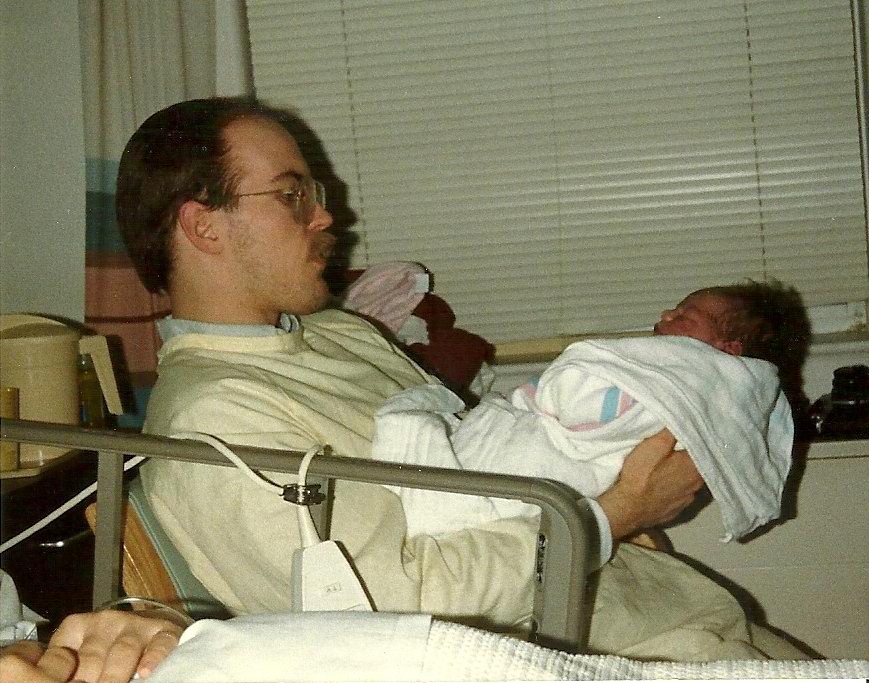
This past weekend was Father’s Day and today is my dad’s 50th birthday, so I thought in honor of all the dad awesome-ness I would write a post on some important things that he has taught me over the years.

I can really only attribute my passion and curiosity for health and nutrition to my dad. I’ve mentioned before that he is a kinesiotherapist, and he also knows a plethora of information on the way the body works as a whole. He is always eager and willing to share that knowledge with me and I have grown to love everything about the way the body works and how we can help it to perform at its optimum levels. I honestly don’t think that I would have started this blog or begun my pursuit of my own health goals without his help and guidance.

scan0004

I think that one of the most important lessons that my dad has taught me is this; no matter how many times life knocks you down, you can ALWAYS get back up and rebuild. While this can and does apply to so many aspects of life, I got to thinking how it can directly apply to your health. I know for me personally, there have been so many times that I have failed when it comes to my health. I struggled for years to try and lose weight or establish a consistent exercise program or eat better. How true is that for so many of us? It seems like falling off the health wagon is so much easier than finding something that works for us.

But it is so important to keep trying. Your health is vital, and good health makes your life so much more enjoyable and easier. If I had given up after the first time I faltered, I would never be where I am today. Yes, finding a healthy lifestyle that works for you will take time and you will most likely fail or struggle at some point, but you are strong enough to pick yourself back up and try again. I have been blessed enough to have a father who instilled that in me and has always been there to encourage me to get back up and fight for what is important. So if you are struggling right now, or have given up, know that I believe in you and I know that you can dust yourself off and jump back into the game!

And to my dad, thank you so much for everything that you have taught me, I am a much better person because of it. Happy Birthday D!

Yup, that's his kilt in Buchanan plaid!

Yup, that’s his kilt in Buchanan plaid!