Forcing the Healthy Agenda, Maybe Not the Best

This holiday weekend my husband, Adam and I, spent the weekend at Lake Webster in Indiana.  We had a great time relaxing, spending time with family, getting out on the water in the boat/jet ski, and eating delicious food!  Obviously one of my favorite parts of the weekend was cooking delicious meals for the whole family and then enjoying the company while feasting!  Because we were out in the good old Midwest, we had to stop at a farm stand to pick up some sweet corn and other delicious produce like watermelon.  On a farm stand run, I noticed that there was a sign that said they accepted SNAP money.  For those of you who don’t know SNAP stands for Supplemental Nutrition Assistance Program, aka Food Stamps.  I was pleasantly surprised to discover that people who are enrolled in SNAP could purchase fresh local produce at a farm stand.  It made me think about the controversy that is going on with SNAP right now.

farm20market

There has been an ongoing debate over allowing the government to dictate what people can purchase using SNAP.  Some believe that the government should not allow those enrolled in SNAP to purchase unhealthy food with their money.  Others say that the government has no right to tell people what they should or should not eat.  This is not just a debate going on over food stamps either.  Remember a few months back when Mayor Bloomberg of NYC tried to get a citywide ban on purchasing soda over 16 oz?  The bill was shot down in court and never made it through.  These types of debates pop up all the time and have for a long time.  Seeing the current back and forth over SNAP though got me thinking, what was my stance on the issue?

You might think that this would be a simple issue for me.  I write a health blog and firmly believe in a healthy life for ALL people, whether they utilize food stamps or not.  You might think that I would side with those who believe that the government should restrict purchases on junk food.  My beliefs are a little more complex than that: I believe in educatio, not mandates.  Let me explain.  I don’t like the idea of people enrolled in SNAP spending money on unhealthy food choices.  I personally don’t buy junk food, so I don’t like that government money (aka my tax dollars) goes towards helping others buy junk food.

That being said, I do NOT believe that we should tell people what they can and can not purchase/eat.  They are adults and should have the freedom to buy what they want to eat, just like those not enrolled in SNAP can choose what to eat.  That is one of the pros (and sometimes cons) of living in a free country with free choice.  You are able to decide how you want to eat and no one can tell you otherwise.  How unfair and hypocritical to not allow this same freedom to those who might not be able to afford to eat without the assistance of SNAP.  Again, I firmly believe that every single person should have access to a healthy lifestyle, no matter socioeconomic status, race, religion, or gender.

I understand that not everyone in SNAP has access to healthy food.  There are food deserts, areas that do no have access to fresh, healthy, and affordable food,  all over the country.  These areas usually have to rely on convenience stores or fast food restaurants for the bulk of their diet.  I also know that forcing someone to eat healthy food when they don’t want to is a good way to turn them away from eating a healthy diet.  I prefer my belief in educating people about healthy lifestyles.  I think that we need to teach people how to live a healthy lifestyle with the tools and resources they have access to, because I am not into forcing people to do something, even if that is learning how to live healthier. I propose that those who enroll in SNAP take one mandatory class that shows the basics of living healthy.  After that one class, they can go on their merry way and do whatever they want with their food decisions.  After that one class though, SNAP should offer other classes and resources that people can choose to participate in and will help them further their knowledge of leading a healthy lifestyle.  This way, you can give every single person in SNAP some tools to utilize through the one class, but then only those who are truly interested can further their knowledge with cooking classes or learning how to eat healthy on a budget or guided trips to local grocery stores.

Is this a perfect plan?  Of course not.  Obviously these classes would have to be funded in some way, and most likely that would mean through tax dollars.  While everyone might not be so enthusiastic about their money going towards this, I would much rather have my money fund education than stocking convenience stores with more chips and soda.  I think that this can be a step in the right direction and I also believe that there are groups and organizations out there that are making great strides towards bettering SNAP.  SNAP to Health! is a great website that has tons of information about programs and resources and other tidbits about what people can do help further the health and nutrition of the USA.  I urge you to check out the site and see what you can do in your area to help out.  I know that promoting better health for all can seem like a losing battle.  It takes a bunch of tiny steps that may not look like they are doing anything to help, but every little step counts.  I believe that the more people we can educate and get on board with leading a healthier life, the faster we can reach the goal.  Your health is one of your most important assets; fight for better health and fight to help others reach that very same goal!

Obesity is a Disease: That’s a Good Thing, Right?

In case you haven’t heard, obesity has officially been recognized as a disease.  Ever since this declaration, people have been debating whether this is a good or bad thing.  There seem to be equal supporters for and against the new label and both sides have some very valid points.  I understand the pros and cons that both sides have brought up and I have a few of my own.  While I’ll share my opinion on labeling obesity as a disease, I think that the more important question I have about this whole thing is what will change?  How will this help to make things better?

quotes_insanity_wisdom_insanity_observation_quote-fbb01ade51f196dfc2ae04510609f612_h_large

From my perspective, recognizing obesity as a disease is a good first step, but I worry that it will backfire.  I am really glad that people who need help have a better chance at actually getting that help now that obesity is considered a disease.  Insurance companies may provide more financial support, allowing doctors to be better equipped and ready to help treat obese patients.  But here is where I start to get a little leery about this, I think that people will start using this as a crutch to not do anything.  I feel that they will take the “Oh I have a disease, there really isn’t anything I can do” attitude and not try to change.  I worry that people will turn to drugs or miracle pills rather than educating themselves on eating better foods or moving more.  Don’t get me wrong, I totally understand that being obese is a case by case disease and that some people really might have no control over their weight gain.  In those cases I know that surgery and medication may be the only way to go.  I also know that some people use those methods as the easy way out and now that obesity is a disease, many drug companies are going to start pumping out more and more medications that will combat obesity.  What’s easier? Overhauling your eating and your lifestyle or taking a pill 3 times a day?

My other big worry is that the whole focus of obesity is going to shift from prevention to treatment.  In fact, that is my concern with a lot of our healthcare issues.  So many diseases and conditions are 100% preventable, yet we wait until they move past the prevention stage and move into the treatment stage.  Obesity, and the many conditions that come along with obesity, is one of these diseases.  There are so many things that we can do prevent obesity, yet we are the most obese country in the world.  We know that if we eat better and exercise we can greatly reduce the risk of obesity and all it’s related disease/ailments.  Unfortunately I see obesity being called a disease furthering the problem of treatment vs. prevention.  I try not to always see the glass as half-empty, but I feel like drug companies and many doctors will see this as a prime opportunity to make even more money and I worry that Americans will fall right into that trap.  Sadly we like the easy way out of things and getting surgery or taking medications is a lot easier than putting in the work to prevent obesity.

Capture

I haven’t lost all hope though.  I think that this is also a prime opportunity for people to step up and really make some big overhauls when it comes to people’s health.  There are so many groups and organizations out there that are striving to educate the public about being healthier (prevention rather than treatment) and I hope that this new label will give them the means and support to further their endeavors.  Take Microgreens for example.  This non-profit organization works with children in the D.C. area teaching them how to cook and prepare low cost meals.  Children whose families benefit from the Supplemental Nutrition Assistance Program (aka food stamps), can take classes through Microgreens and learn how to budget, shop for and prepare a healthy meal all for $3.50 per meal.  This is a great program because it not only educates children about healthy eating, it shows them how to go through each step of the process and learning these skills at a young age is so important for future health.  It also encourages kids to share their knowledge and skills with their families, spreading the education of better health even further.  It would be amazing if we could get these types of programs to children and families all over the country and perhaps we can make that possible now that obesity is a disease.

Another benefit I hope to see is more in-depth, one on one counseling for those individuals who are serious about bettering their health and leaving obesity behind.  Before alcoholism was labeled a disease in 1956, there was little to no help for those battling their addiction, in fact most people viewed alcoholism as a stigma and tried to ignore the problem rather than do anything about it.  Once it became a disease though, so many more resources opened up.  Programs such as Alcoholics Anonymous were formed, treatment centers were set up, and counselors were trained to work with both alcoholics and their families.  I am not trying to say that obese people and alcoholics are in any way the same; each disease has it’s own criteria and symptoms.  Labeling alcoholism as a disease enabled preventative education and treatment options to flourish, and I believe labeling obesity as a disease can do the same. Perhaps more programs and groups will be formed to help those dealing with obesity, and for all those affected by obesity.  Maybe more schools and communities across the nation will be equipped with classes to help educate the public and prevent obesity from even starting.  How great would it be if those people who are obese or overweight weren’t treated like social pariah’s and ignored but rather were given an abundance of resources to help them heal and have better health and better lives?

Do I think that calling obesity a disease will fix all the problems magically? No.  Do I worry that it could make things worse? A little.  Do I believe that good changes can happen from this? You bet.  While I think we need to proceed with caution on this, I wholeheartedly believe that this can be the start of some great things for America’s health.  It’s up to us to help guide which way this can all go.  If we put our support behind things like better food in schools and supermarkets, organizations that are fighting to educate the public about health, and help for those who are struggling with obesity or their health in general, I think that we can make some major strides toward a happier and healthier future for everyone.

The Pitfalls of Advertising…even the good stuff

It shouldn’t come as a surprise that advertising companies know exactly how to reel in consumers, that’s their job. They compile loads of data and research and conduct numerous studies just to find out what makes the general population tick. They want to know EXACTLY what will make you personally buy their product, and they are good at their jobs. The food industry is huge, and marketing strategies are common practice, but what are the effects of all this food advertising?

chart

Children’s Exposure to Food Advertising on TV

chart2

Children’s Exposure to PSA on Fitness or Nutrition


Because the food industry and advertisers are smart, they know that their easiest, and most vulnerable, targets are children. If you have ever watched cartoons on a Saturday morning (admit it, you still do), every single commercial is selling something to kids and many of those commercials are selling food. A 2007 study conducted by the Kaiser Family Foundation found that children in the 2 to 7 age bracket will see 12 food related commercials per day. That would translate to about 30 hours and 4,427 food ads in one year. As children get older, the amount of food ads increases. I don’t know about you but the fact that a child as young as 2 years old is already being exposed to a barrage of food commercials is a little shocking. Not as surprising is the amount of junk food commercials compared to the amount of healthier food commercials, which is about 76% junk and 5% healthy.

The problem with all these commercials for food being aimed directly at children is that kids have a very hard time grasping the concept of advertising.  They just do not have the cognitive capacity to understand that they are being sold a product and very young kids can’t even determine the difference between a TV show and a commercial.  What’s more is that their favorite characters or celebrities are in these advertisements trying to get them (or more accurately their parents) to buy the product.  What kid doesn’t want to eat mac and cheese shaped as their favorite cartoon character?  Already at a young age these advertisements are setting up unhealthy eating habits.  In this 2009 health study on TV viewing and food consumption, researchers found that children eat 45% more food when exposed to food advertising.  These habits lead into adulthood as this study also found that adults consumed more as well after exposure to food advertising.

fat-kid-eating-chips-watching-tv

I can see you thinking to yourself, “Well there is an easy fix to this, why don’t we just start marketing healthier food?”  That would seem like the most logical answer, but this has its pitfalls as well.  When the healthier food companies start using the same tactics as the junk food people, say using a popular character to advertise their product,  they are influencing children to buy their product because their favorite character is selling it, not because they actually want the food in the commercial.  It is important to help children make food choices based on their own needs, such as hunger or good nutrition, not because Ronald McDonald is telling them to.  Building a healthy relationship with food at a young age is important because those skills will carry on into adulthood and educate children on how to make healthy choices and take care of themselves.

I know it can seem like an overwhelming task for parents to fight against the millions of advertisements that are constantly being shown to their children.  Heck, it’s hard for adults to navigate their own food choices when it comes to advertising.  Here are a few ideas to try out (for both kids and adults) when it comes to not being swayed by food advertisements.

1. Stop and decide if you are actually hungry.  You just saw a commercial for a Dorito Taco at Taco Bell when, suddenly, you REALLY want a taco.  Or maybe your child has come running at you telling you they NEED to have a happy meal even though they just had breakfast 2 minutes ago.  Before you drive to Taco Bell or rush out to get a happy meal for your tot, take a second and stop.  Are you really hungry? When was the last time you ate? What about the commercial was appealing to you? Taking the time to really evaluate why you want food will cut the chance of you eating just for the sake of the advertisement.  Talking through these questions with your child can help them start to learn how to make proper food choices, such as eating when they are actually hungry versus eating because they just saw food on TV.

2. Limit the amount of time you spend watching TV.  My husband Adam and I have not had cable TV for the past 3 years for numerous reasons, mainly cost.  Now before you think we are total nut jobs who just sit and stare at each other or only (gasp!) read for entertainment, we do have Netflix and we watch plenty of TV shows and movies.  What we do not, or very rarely, watch are commercials.  Netflix does not have commercials and because we don’t have “regular” TV we are not exposed to advertising in this form.  I have no clue what food specials are running at local fast food place or what the next crazy food concoction some company has come up with.  Because I don’t watch TV, I don’t have any desire for or knowledge of these things and I believe that has really helped with leading a healthier lifestyle.  I understand that not everyone wants to cut off their cable and that is totally your decision.  You can however choose to limit your time watching TV.  Limiting your exposure to advertisements weakens their effect on you.  Many people have some form of DVR, so you could even record your favorite shows and fast forward through the commercials.  Better yet, how about cutting down your TV time and doing something to promote your health? Play outside, read a book, take a new exercise or cooking class.  By getting away from the television, you also get away from the advertising.

3. Let your children play a part in their eating.  This last tip is more for children.  Instead of making every single food choice for your child, involve them in the process.  For younger kids, give them plenty of healthy options at mealtime and let them choose what to eat.  At the grocery store, give kids a list of healthy foods that you are willing to buy and let them pick a few to find and purchase.  For older kids, let them help you cook.  Get them to pick out a recipe they want to try or simply have them help you prepare food for dinner.  Being allowed to be a part of their own eating lets kids find out what foods they like or don’t like and lets them have some control over their habits.

These are just a few ideas to get started, but there are plenty more out there.  Here are some more in depth tips for children of various ages.  Just because those tips are aimed at children though doesn’t mean they can’t be helpful to adults as well.  Remember you are just as susceptible to advertising as children, even if you do know better.  Like I said earlier, advertisers are smart and know how to reel you in.  As long as you are conscientious and aware, you can avoid unhealthy pitfalls and even help the future generation find their best health!

What I Learned from My Dad

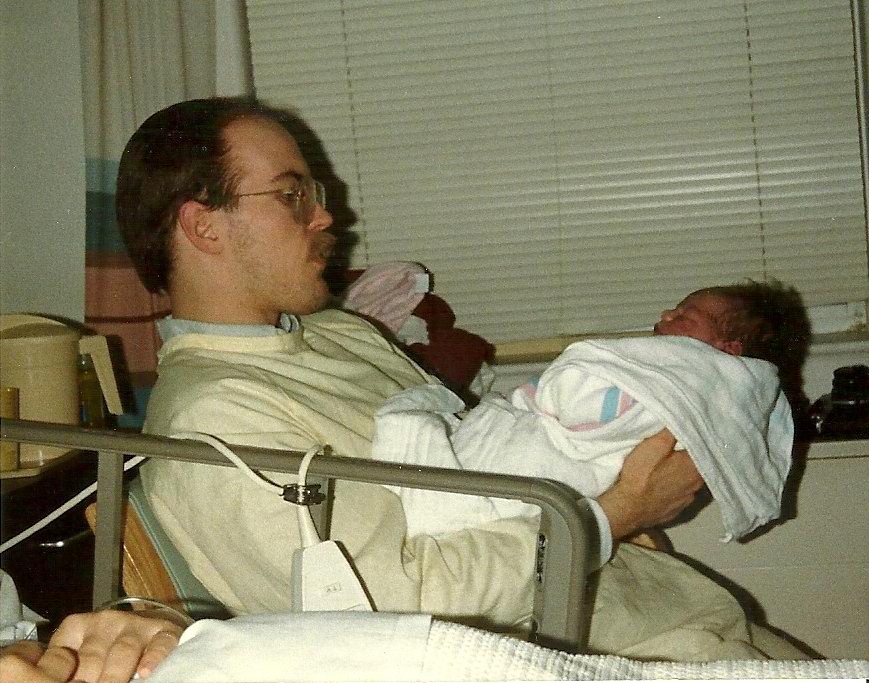
This past weekend was Father’s Day and today is my dad’s 50th birthday, so I thought in honor of all the dad awesome-ness I would write a post on some important things that he has taught me over the years.

I can really only attribute my passion and curiosity for health and nutrition to my dad. I’ve mentioned before that he is a kinesiotherapist, and he also knows a plethora of information on the way the body works as a whole. He is always eager and willing to share that knowledge with me and I have grown to love everything about the way the body works and how we can help it to perform at its optimum levels. I honestly don’t think that I would have started this blog or begun my pursuit of my own health goals without his help and guidance.

scan0004

I think that one of the most important lessons that my dad has taught me is this; no matter how many times life knocks you down, you can ALWAYS get back up and rebuild. While this can and does apply to so many aspects of life, I got to thinking how it can directly apply to your health. I know for me personally, there have been so many times that I have failed when it comes to my health. I struggled for years to try and lose weight or establish a consistent exercise program or eat better. How true is that for so many of us? It seems like falling off the health wagon is so much easier than finding something that works for us.

But it is so important to keep trying. Your health is vital, and good health makes your life so much more enjoyable and easier. If I had given up after the first time I faltered, I would never be where I am today. Yes, finding a healthy lifestyle that works for you will take time and you will most likely fail or struggle at some point, but you are strong enough to pick yourself back up and try again. I have been blessed enough to have a father who instilled that in me and has always been there to encourage me to get back up and fight for what is important. So if you are struggling right now, or have given up, know that I believe in you and I know that you can dust yourself off and jump back into the game!

And to my dad, thank you so much for everything that you have taught me, I am a much better person because of it. Happy Birthday D!

Yup, that's his kilt in Buchanan plaid!

Yup, that’s his kilt in Buchanan plaid!

How do I look?

I am not perfect. Thank you Captain Obvious, right? Of course I’m not perfect, no human is perfect. I think that people who have health or fitness blogs sometimes get put on this pedestal as totally in sync with all things nutrition and exercise. This could not be farther from the truth, at least for me. Yes, I have figured some things out and I have better health than I ever did before, but I still struggle daily and have a lot of learning and growing to do when it comes to my health. That is what I love about health, it’s a journey that we all have to go through and evolve as our health evolves.

That being said, I wanted to share a personal post with you today. I have gone back and forth about whether or not to talk about this, but I have decided that in order for me to move forward I have to get this out in the open. No one likes to admit that they struggle or have issues, but we all have them so there should be nothing to be ashamed of if you have to say, “Hey, I’m dealing with this right now.” It’s a part of the process of working through that struggle.

I have shared my story with weight loss/gain and my issues with self-image before. I have come leaps and bounds from the girl I was back then to who I am now. That is why it has troubled me that some self-image issues have started to pop back into my life. I have noticed lately that I am becoming very focused on the way my body looks. I spend more time looking in the mirror, zeroing in on what I believe to be my imperfections. I find my thoughts turning to things like “How do I look in this outfit?” or “Are people staring at my stomach?” Because of my past with these struggles, I know that this is a dark and unhealthy road to start down.

It’s tough in a society that places a very high value on looks to NOT think about your appearance, but I do not want to place all the blame on other people or the world. Yes, they contribute to the problem, but they aren’t the only factor. For me, I seem to have this distorted and unrealistic view of what I should look like. This is partly due to constantly looking at airbrushed models when I was younger and believing that woman truly looked like that. Luckily over the years I have gotten wiser and know that there is no possible way that any woman can have the body that is portrayed in so many magazines and other media. So why am I having a problem now, knowing all that I know and going through all that I have gone through?

The simple answer is, I’m not totally sure. I think though that I will always have to battle my self-image demons and the little voice that whispers to me that I should look a certain way. I have fought that little voice before, so I know that I can do it again. How am I going to try and work through this? I want to shift my thoughts from what I look like to what I can physically do. I was thinking about that this week and I was shocked at all the things my body can do that I never thought was possible before.

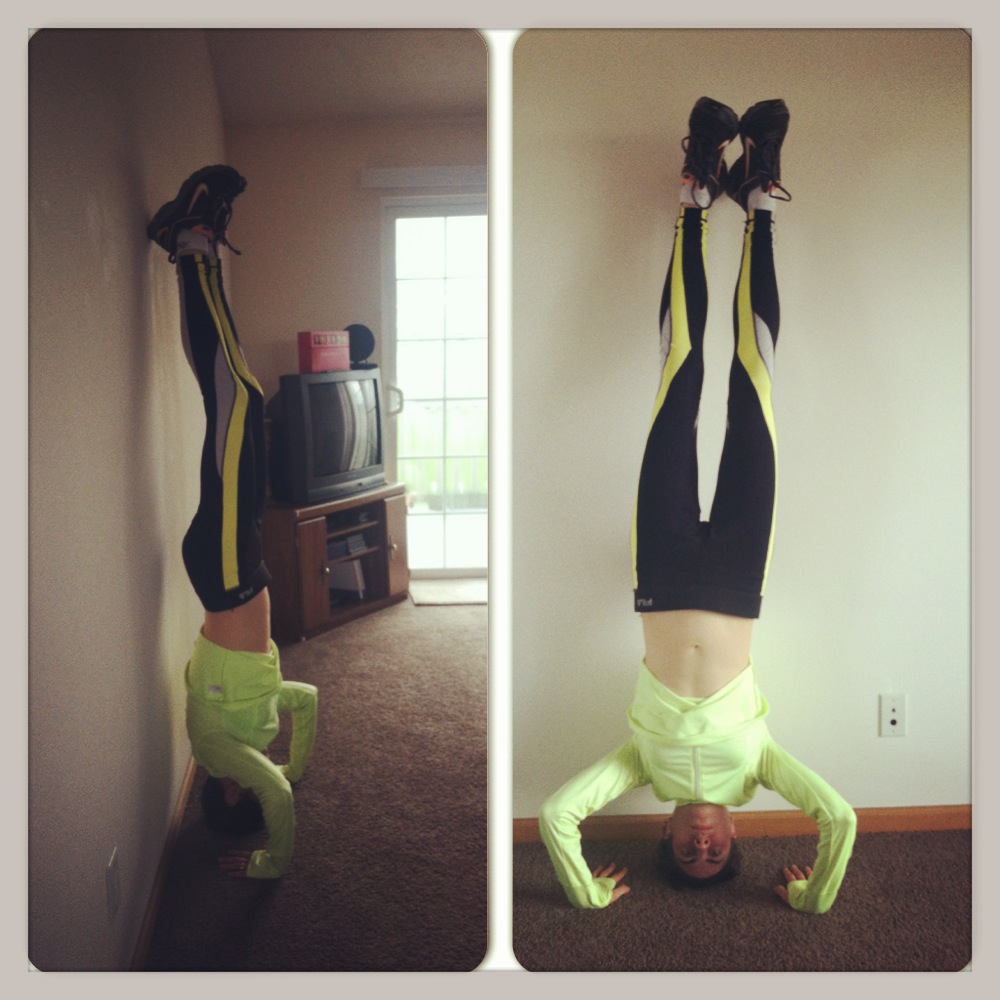
I can run over 6 miles in less than 50 minutes. When I first started running, I could barely get through one mile without dying. I can touch my toes (and some days even the floor) and hold difficult yoga poses, like the wheel, for a significant period of time. I could barely do downward dog when I first began yoga. I can hold a plank, and do some advanced variations, for 5 consecutive minutes. I used to collapse after a minute of planks (if you could call barely raising my body off the floor a plank). I can do a headstand and barely need to use a wall for support any more. A month ago I struggled to even get my feet off the floor, let alone above my head. These are just a few of the things I thought of that I can do. When I look at all the things I have accomplished in the last few years, it doesn’t seem so important to have washboard abs or buns of steel. Not to toot my own horn, but I can do some pretty amazing things that have NOTHING to do with the way I look.

I used to struggle just to get my feet in the air, now I barely need the wall

I used to struggle just to get my feet in the air, now I barely need the wall

Furthermore, I have so much more knowledge about how to live a healthy lifestyle. I can move through a kitchen with ease and create a delicious and nutritious meal. I can give others advice and help on how to live a healthier life. I started a blog that, hopefully, motivates and inspires my readers to change for the better. None of these things are dependant on the way I look.

The wheel.  It's not perfect yet, but I never thought I would be able to even lift my leg off the floor when I first attempted this pose

The wheel. It’s not perfect yet, but I never thought I would be able to even lift my leg off the floor when I first attempted this pose

I know that there are some of you reading this right now who are going through self-image problems. You look in the mirror and don’t like what you see staring back at you. You hate the thought of other people looking at you, believing they are constantly judging the way you look. You wish there was some way you could look like someone else and finally be happy. Trust me, I’ve been there, and done that, and am still there sometimes. I encourage you to look at other things in your life that have nothing to do with your looks. Find all the accomplishments and amazing things that you can do that don’t hinge on your reflection in the mirror. For me, those accomplishments have made me feel empowered and I think that your achievements can give you a strength that you might not have realized you had. Don’t stop there either. Once you have listed your awesomeness, make new goals. That way you can work towards something and feel super proud of yourself when you have another item to add to your awesome list. Me? I am going to turn that headstand into a handstand and not use the wall for support. I am going to work towards running 10 miles and then a half-marathon. I am going to continue to expand my knowledge of health and nutrition and share it with as many people as I can. I am going to work on not judging the way I look and start focusing on all that I can do. Because I am so much more than just a reflection in the mirror.

motivation-monday-feb-4