The Pitfalls of Advertising…even the good stuff

It shouldn’t come as a surprise that advertising companies know exactly how to reel in consumers, that’s their job. They compile loads of data and research and conduct numerous studies just to find out what makes the general population tick. They want to know EXACTLY what will make you personally buy their product, and they are good at their jobs. The food industry is huge, and marketing strategies are common practice, but what are the effects of all this food advertising?

chart

Children’s Exposure to Food Advertising on TV

chart2

Children’s Exposure to PSA on Fitness or Nutrition


Because the food industry and advertisers are smart, they know that their easiest, and most vulnerable, targets are children. If you have ever watched cartoons on a Saturday morning (admit it, you still do), every single commercial is selling something to kids and many of those commercials are selling food. A 2007 study conducted by the Kaiser Family Foundation found that children in the 2 to 7 age bracket will see 12 food related commercials per day. That would translate to about 30 hours and 4,427 food ads in one year. As children get older, the amount of food ads increases. I don’t know about you but the fact that a child as young as 2 years old is already being exposed to a barrage of food commercials is a little shocking. Not as surprising is the amount of junk food commercials compared to the amount of healthier food commercials, which is about 76% junk and 5% healthy.

The problem with all these commercials for food being aimed directly at children is that kids have a very hard time grasping the concept of advertising.  They just do not have the cognitive capacity to understand that they are being sold a product and very young kids can’t even determine the difference between a TV show and a commercial.  What’s more is that their favorite characters or celebrities are in these advertisements trying to get them (or more accurately their parents) to buy the product.  What kid doesn’t want to eat mac and cheese shaped as their favorite cartoon character?  Already at a young age these advertisements are setting up unhealthy eating habits.  In this 2009 health study on TV viewing and food consumption, researchers found that children eat 45% more food when exposed to food advertising.  These habits lead into adulthood as this study also found that adults consumed more as well after exposure to food advertising.

fat-kid-eating-chips-watching-tv

I can see you thinking to yourself, “Well there is an easy fix to this, why don’t we just start marketing healthier food?”  That would seem like the most logical answer, but this has its pitfalls as well.  When the healthier food companies start using the same tactics as the junk food people, say using a popular character to advertise their product,  they are influencing children to buy their product because their favorite character is selling it, not because they actually want the food in the commercial.  It is important to help children make food choices based on their own needs, such as hunger or good nutrition, not because Ronald McDonald is telling them to.  Building a healthy relationship with food at a young age is important because those skills will carry on into adulthood and educate children on how to make healthy choices and take care of themselves.

I know it can seem like an overwhelming task for parents to fight against the millions of advertisements that are constantly being shown to their children.  Heck, it’s hard for adults to navigate their own food choices when it comes to advertising.  Here are a few ideas to try out (for both kids and adults) when it comes to not being swayed by food advertisements.

1. Stop and decide if you are actually hungry.  You just saw a commercial for a Dorito Taco at Taco Bell when, suddenly, you REALLY want a taco.  Or maybe your child has come running at you telling you they NEED to have a happy meal even though they just had breakfast 2 minutes ago.  Before you drive to Taco Bell or rush out to get a happy meal for your tot, take a second and stop.  Are you really hungry? When was the last time you ate? What about the commercial was appealing to you? Taking the time to really evaluate why you want food will cut the chance of you eating just for the sake of the advertisement.  Talking through these questions with your child can help them start to learn how to make proper food choices, such as eating when they are actually hungry versus eating because they just saw food on TV.

2. Limit the amount of time you spend watching TV.  My husband Adam and I have not had cable TV for the past 3 years for numerous reasons, mainly cost.  Now before you think we are total nut jobs who just sit and stare at each other or only (gasp!) read for entertainment, we do have Netflix and we watch plenty of TV shows and movies.  What we do not, or very rarely, watch are commercials.  Netflix does not have commercials and because we don’t have “regular” TV we are not exposed to advertising in this form.  I have no clue what food specials are running at local fast food place or what the next crazy food concoction some company has come up with.  Because I don’t watch TV, I don’t have any desire for or knowledge of these things and I believe that has really helped with leading a healthier lifestyle.  I understand that not everyone wants to cut off their cable and that is totally your decision.  You can however choose to limit your time watching TV.  Limiting your exposure to advertisements weakens their effect on you.  Many people have some form of DVR, so you could even record your favorite shows and fast forward through the commercials.  Better yet, how about cutting down your TV time and doing something to promote your health? Play outside, read a book, take a new exercise or cooking class.  By getting away from the television, you also get away from the advertising.

3. Let your children play a part in their eating.  This last tip is more for children.  Instead of making every single food choice for your child, involve them in the process.  For younger kids, give them plenty of healthy options at mealtime and let them choose what to eat.  At the grocery store, give kids a list of healthy foods that you are willing to buy and let them pick a few to find and purchase.  For older kids, let them help you cook.  Get them to pick out a recipe they want to try or simply have them help you prepare food for dinner.  Being allowed to be a part of their own eating lets kids find out what foods they like or don’t like and lets them have some control over their habits.

These are just a few ideas to get started, but there are plenty more out there.  Here are some more in depth tips for children of various ages.  Just because those tips are aimed at children though doesn’t mean they can’t be helpful to adults as well.  Remember you are just as susceptible to advertising as children, even if you do know better.  Like I said earlier, advertisers are smart and know how to reel you in.  As long as you are conscientious and aware, you can avoid unhealthy pitfalls and even help the future generation find their best health!
What I Learned from My Dad

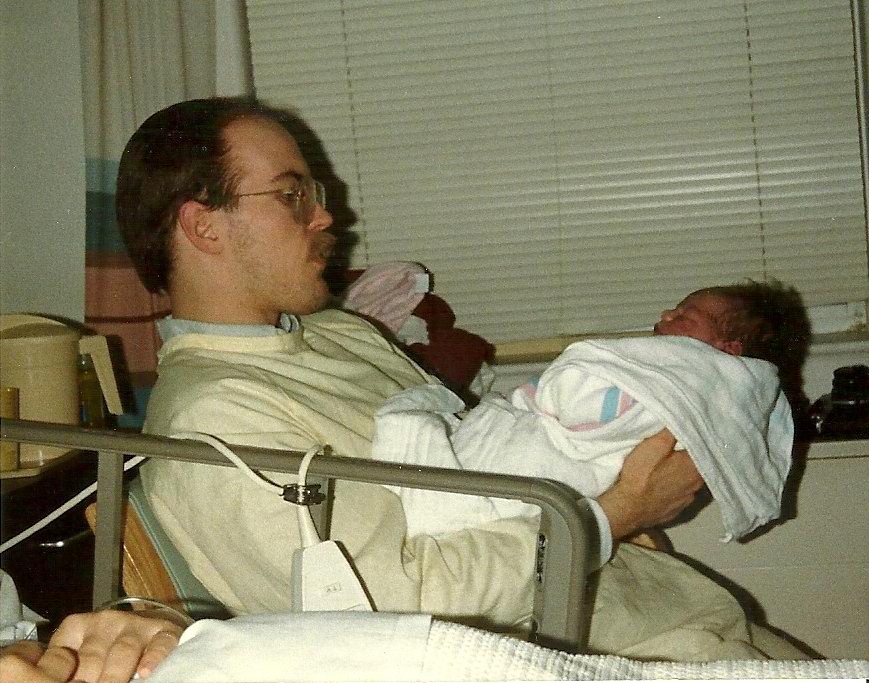
This past weekend was Father’s Day and today is my dad’s 50th birthday, so I thought in honor of all the dad awesome-ness I would write a post on some important things that he has taught me over the years.

I can really only attribute my passion and curiosity for health and nutrition to my dad. I’ve mentioned before that he is a kinesiotherapist, and he also knows a plethora of information on the way the body works as a whole. He is always eager and willing to share that knowledge with me and I have grown to love everything about the way the body works and how we can help it to perform at its optimum levels. I honestly don’t think that I would have started this blog or begun my pursuit of my own health goals without his help and guidance.

scan0004

I think that one of the most important lessons that my dad has taught me is this; no matter how many times life knocks you down, you can ALWAYS get back up and rebuild. While this can and does apply to so many aspects of life, I got to thinking how it can directly apply to your health. I know for me personally, there have been so many times that I have failed when it comes to my health. I struggled for years to try and lose weight or establish a consistent exercise program or eat better. How true is that for so many of us? It seems like falling off the health wagon is so much easier than finding something that works for us.

But it is so important to keep trying. Your health is vital, and good health makes your life so much more enjoyable and easier. If I had given up after the first time I faltered, I would never be where I am today. Yes, finding a healthy lifestyle that works for you will take time and you will most likely fail or struggle at some point, but you are strong enough to pick yourself back up and try again. I have been blessed enough to have a father who instilled that in me and has always been there to encourage me to get back up and fight for what is important. So if you are struggling right now, or have given up, know that I believe in you and I know that you can dust yourself off and jump back into the game!

And to my dad, thank you so much for everything that you have taught me, I am a much better person because of it. Happy Birthday D!

Yup, that's his kilt in Buchanan plaid!

Yup, that’s his kilt in Buchanan plaid!

Clean your plate… Kind of

I am willing to bet that some of you (me included) have finished a meal even though you weren’t really hungry anymore. A lot of us have probably done this, as it’s really easy to just finish all the food on your plate even if you are already full.  You might have heard about “starving children in Africa” and felt the need to finish a second helping of french fries for their sake (because that makes a lot of sense…).  I would even go a step further and say that some of us don’t even recognize our own body’s signals for satiety, causing us to overeat at most of our meals.

This isn’t a new concept. In 2006, 6 of every 10 Americans said they ate more than they should. As a country, Americans know very well that they are overeating and that it is contributing to our ever-expanding waistlines and health problems. There have been countless studies and research that has gone into showing us that we are eating too much, but I think the more important question we need to address is when did we start overeating? I don’t mean as a nation, I mean you as an individual.

For the most part, you were not born eating too much food. In fact, if you look at children’s eating habits they are some of the best intuitive eaters. When they are hungry they will eat and when they are full they stop eating. If they don’t eat a huge lunch, they will usually eat more at dinner. They don’t obsess over certain foods or meal times. Trust me, they will let you know when they are hungry. I’ve worked as a nanny for the past two years and gotten to watch this first hand. It fascinates me how easy it is for a 2-year-old to grasp the concept of being full and being done with a meal. It doesn’t bother him if there are still five green beans left on his plate, or three graham cracker bunnies he didn’t eat. When he is done eating he is done eating and happily goes on with his day. Where did adults, the supposedly wiser and more sophisticated group, go wrong on this concept?

While there are many factors that contribute, one of the biggest influences is that of the parents, but I don’t think they are doing it on purpose.  Most parents want their child to lead a healthy and happy life.  They want to make sure that they are providing nutritious meals that will help their children grow.  It can be really frustrating and even worrisome to have a child that seems to never eat.  I know the struggle that can occur when you just want your kid to eat one bite of their meal because they haven’t eaten anything all day.  But I also believe that sometimes parents need to be open to having their child guide their own eating habits.  When parents stress over getting their children to eat, or force them to finish all their food on their plate, they could be setting their child up for future eating problems.  Over time, if a child is cleaning his plate even though he is clearly not hungry, he will begin to lose that sense of satiety.  He now knows that in order to be done with a meal, the plate needs to be empty, whether he is full or not.

Losing our sense of fullness can lead to other bad habits later on as well.  Adam shared a study with me last week about teens not paying attention to how many calories they ate in a meal.  While I am not a big supporter of religiously counting calories, it is interesting to see that most teens ignored the calorie count completely.  I don’t know if there is a definite link between being aware of how much food you eat and our sense of fullness, but I think that they probably do affect each other.  I know that there used to be many times I would be eating and I had no clue why.  I wasn’t hungry, but somehow I was downing crackers like it was my business.

How do you regain your intuitive eating skills?  It’s tough, but you can retrain your body to its childhood eating habits.  Don’t expect the change to happen overnight and don’t expect to be perfect all the time.  There will be days that you slip up and that is totally ok, just move on and do better next time.  These are a few of the tips that I use to help me really tune in to my body’s signals.

Make sure you’re actually hungry.  When you get the urge to grab a bag of chips or chow down on a huge meal, pause for just a second.  Ask yourself a few questions, when was the last time I ate?  Am I really hungry or am I bored/sad/depressed/around a bunch of other people eating?  Will I feel better about myself after eating this meal or will I look back with regret?  Once you answer those questions, you can better decide if you are actually hungry and ready to eat a meal.  To take this a step further, drink a glass of water before you eat anything.  Many times, we misread thirsty signals as hunger signals and immediately dive into a snack.

S L O W  D O W N.  When you are eating a meal, take your time.  This can be a key factor in reading your “I’m full” signal.  Sometimes we have a tendency to rush through a meal in ten minutes and not realize we had way more to eat than we really wanted or needed.  Take a few bites, put your fork down, sip some water, and enjoy the flavor of your food.  By giving your body those few extra minutes in between bites, you are letting it register the food you have already eaten and allowing you to know when you are full, before your plate is totally clean.  Also, eat until you are pleasantly full, not bursting at the seams.  No one likes that feeling of your waistband cutting in to your stomach after a huge chow fest.

Eat foods that will fill you up.  You’re probably thinking, “Uh, Katie?  Any food can fill me up.”  Let me be a bit more specific.  Choose foods that have a low density of calories, but high quantity.  Caloric-Density1

400 calories of oil, from say your fried mozzarella sticks, will not fill you up as much as 400 calories of salad.  You won’t feel full from that 400 calories of oil, so you’ll continue to eat until you do feel full, possibly taking in more food than your body really wants or needs.  I am not saying that you have to ONLY eat vegetables in order to know when you’re full.  What I am saying is that you need to choose foods that will fill you in the healthiest way.  Including vegetables in your dinner of grilled chicken and brown rice is a very easy way to add bulk that won’t bulk you up.

Be patient, and kind, with yourself.  Like I said before, it isn’t easy to retrain the way you eat or tune into your body.  Don’t get frustrated if you slip up more than once.  Realize that this is a process and it is OK to have setbacks, you’re human, not Superman.  Just make sure that your slip ups don’t make you abandon everything and fall back into your old habits.  Acknowledge that you had a setback and move on, vowing to make your next choice healthier.  Constantly beating yourself up will not help you get to a healthier state.

Remember, we all started out as some of the best intuitive eaters out there.  One way or another you might have lost that sense, but you CAN gain it back.  I think that a lot of eating problems begin with our lack of awareness of our own bodies, at least that has been the case for me.  Just because someone puts food on your plate, does not mean you absolutely have to eat all of it.  I promise that eating every single scrap of food on your plate just because it’s there will never lead to a feeling of satisfaction.  Knowing you have eaten exactly what you needed and the exact amount your body required will make you feel much happier and healthier!

The Cost of Eating

Yes, we all know that eating healthy is good for us and eating unhealthy is bad for us.  This is not surprising news, mainly because it is drilled into our heads on a daily basis via news, twitter, blogs, newspapers, magazines… You get the idea.  So what does it cost us to eat poorly?

Health- This is the obvious cost of eating an unhealthy diet.  We all know this and it is constantly cited and analyzed.  It is also a really important factor, simply for the fact that a bad diet can cause serious complications, and may ultimately lead to death.  One of the most obvious health effects of eating an unhealthy diet is weight gain.  In 2008, 1.4 billion adults in the world were overweight, and 500 million of those were classified as obese.  There are a ton of obesity related diseases, The CDC lists coronary heart disease, stroke, high blood pressure, type 2 diabetes, cancers, such as endometrial, breast, and colon cancer, high total cholesterol or high levels of triglycerides, liver and gallbladder disease, sleep apnea and respiratory problems, degeneration of cartilage and underlying bone within a joint (osteoarthritis), reproductive health complications such as infertility, and mental health conditions, just to name a few.  That is a really long list of unpleasant complications all related to obesity.  The decision, YOUR decision, to eat unhealthy food leads to this nasty list.  YOU have more control over these issues than you might think.  In this study, researchers looked at two different measures of a quality diet and then assessed how they affected the risk of the chronic diseases mentioned above.  Both measures of a quality diet, which included more consumption of fruits and vegetables and less reliance on processed food, led to reduced risk, with the Alternate Healthy Eating index predicting risk just a little bit better.  Even small changes like eating more fruits and vegetables, like in this study, led to a lower risk of cardiovascular disease.  Food has a huge impact on so much of our daily lives, it is the fuel that runs EVERYTHING going on inside your body.  I know this comparison has been made before, but it really is a great illustration.  Think of your body as a car and the food you eat as the gas.  In order to run properly, your car needs the proper fuel, or else it’s not going anywhere and will likely have major troubles along the way.  The same goes for your body.  It needs the right fuel to function optimally.  Good food = good fuel.

Financial- There are a few factors to the financial aspect of eating a poor diet.  The first relates directly to the health factor, healthcare costs.  Let’s just look at the numbers.  In a 2009 study the CDC found that obesity related costs were around $147 billion in 2006.  By 2012, that number had risen to $190 billion, and exceeded the costs of health care costs for smoking which has in the past been the number one health cost.  That is a HUGE jump in just six years, and unfortunately it doesn’t look any better for the future.  Researchers are saying if we keep heading down the road that we are on, by 2030 health care costs will be somewhere in the $550 billion range.  I won’t speak for anyone else, but to me $550 billion feels like an astronomical price to pay for good health.  While I’m not saying this is the magic bullet to fix all problems health related, eating better foods can DRASTICALLY reduce this cost.  Instead of shelling out your hard earned money on medications and surgeries and other health costs, channel that money to a healthy diet.

“But Katie, that’s the problem!  My family can’t afford to eat healthy foods!  It’s just too expensive!”  Many people are under the impression that eating well is also synonymous with being expensive, and at a quick glance it does seem that way.  Go to the grocery store and find a bag of chips at will probably cost anywhere from 2 to 5 dollars.  If you compare that to a bag of organic chips, without added chemicals or preservatives, the price will probably go anywhere from 4 to 6 dollars.  For some families, they just can’t afford to buy all the “fancy” organic healthy food, and our family is one of them.  That doesn’t stop us from eating as well as we possibly can.  Somewhere along the line, it has gotten drilled into our heads that in order to eat well and be healthy we have to buy the top shelf, organic, non-GMO, gluten-free, dairy free, soy free, nut free, expensive products.  While I don’t think that any of those things are bad, they are NOT absolutely necessary for a healthy lifestyle.  Adam and I have a limited food budget, but we still manage to eat a very healthy and nutritious diet on that budget.  Every Friday I do one big grocery trip for the week.  Here is this week’s haul: photo

All this food cost us $46.80, which is what we usually spend on our big shopping trip.  I do also make a quick run on Wednesday’s to pick up a few things, but that is because at our local grocery store they give a 10% discount on Wednesday and that bill rarely goes over $20.  So for under $70 a week, Adam and I eat a healthy and balanced diet and there are others out there who spend even less on good food.  We have also made the decision to not eat out frequently and spend our money on whole foods that we can prepare for ourselves at home, which saves us money in the long run.  Americans are spending more and more money on eating out, which isn’t helping their wallets or waistlines.

Screen Shot 2013-03-07 at 3.50.28 PM.png

This article shows the trend of spending on food over the years, and it’s amazing to see how it has changed over the years.  More and more is being spent on quick convenient foods and then subsequently on medical costs to combat the result of eating those convenient foods.  You have the power to change that, all you have to do is make the conscious decision to spend your money on food that is healthy and not harmful to your body.

Emotional- This is one cost of a poor diet that might not be looked at as much, but it is a very important one.  Your mental health is just as important as your physical health and often the two go hand in hand.  There is an increased occurrence of self-image issues in obese individuals.  These include eating disorders such as binge eating, body dissatisfaction, poor self-esteem, and overall dissatisfaction with quality of life.  As mentioned earlier, mental disorders are also higher among overweight individuals.  So not only is eating poorly attacking our bodies, it is attacking our minds and even our sense of self worth.  In 2010, researchers conducted a study about the effect of public health advertisements on obese individuals.  Many reported that instead of helping or motivating them to be healthier, they often felt attacked and stigmatized.  So even things that the general public believes are helping spread the word about being healthier are in fact causing more stress and hurt.   Believe me I know how it feels to be unhappy about your weight or your body image.  I have struggled with self-image issues from a very early age and it is a tough thing to overcome completely.  But one of the things that is helping me everyday is the fact that I can take control of that with the way that I eat.  Again, I am in no way saying that food is the magic cure-all for every problem I have listed and not listed, but it is a very powerful aspect of our lives.

There are so many more costs that occur from the way we eat.  If I were to talk about them all, we could be here for days and while I would love to believe that you would thoroughly enjoy reading my every word on the subject (I never said I wasn’t just a tad disillusioned),  I don’t want to sit here and beat a dead horse.  Like I said at the beginning, we all have heard that eating bad is not good for us, it isn’t rocket science.  I hope that some of the information I have presented to you today has helped you see just how big of an impact the way you eat can affect your life.  I know it may seem like a huge step to totally change your eating habits, but it is worth it.  Not only to just feel better but to live better! I hope you have a fabulous Monday and talk to you guys soon! Remember to follow me on Pinterest, Twitter, and Instagram to get more updates, facts and insights into eating better!

Someone’s in the Kitchen with Dinah….

It’s probably no shock that I love to be in the kitchen, cooking and creating delicious (and healthy!) meals.  For me, there is something therapeutic and fulfilling about the whole process of putting a meal on the table.  I love searching through recipes, gathering the ingredients, tying my apron around my waist and getting down to business.  I’ll be the first to tell you that I am not a gourmet chef by any means.  I wouldn’t even claim to be an amateur chef.  Just a gal who likes to cook and serve meals.

I’ve heard many times that people would love to be able to cook all their meals, but they aren’t good cooks or don’t have time, or (gasp!) hate to be in the kitchen.  All of these (except for that last one!), are legitimate problems when it comes to eating healthier.  One of the best ways to make sure you are getting proper nutrition, is to be the one in charge of all the food that goes into your body.  Easier said than done right? I understand that not everyone will share my love of all things kitchen/cooking.  I do however have a few tips that can help you navigate your way through the kitchen maze and start to take your health into your own very capable hands!

Have some confidence! My mom always told me that if you could read you could cook.  At it’s very minimum, cooking is being able to read a recipe and follow the instructions.  Of course there are some exceptions to this and cooking does have a lot more involved, but don’t second guess yourself.  You are at the top of the food chain! You are an intelligent being (I assume!). You are more than capable of tackling that chicken noodle soup recipe!

Keep it simple.  Going along with the first point, keep your cooking simple.  Don’t make your kitchen debut with a fancy schmancy recipe that has hard-to-find ingredients and will chain you to the oven all day using crazy techniques like braising or caramelizing.  Find simple, short recipes that have a few steps and common ingredients.  You will feel so much more calm and proud of yourself when you can place a complete meal on the table as opposed to a failure when your souffle deflates half way through cooking!  As you cook more and more you will get better and be able to “graduate” to more complicated meals.

Read the whole recipe BEFORE you start.  It’s a rookie mistake (one that I have made at least once…) to not read through the whole recipe before you dive right in.  There is nothing worse than being halfway through your cooking and realizing you need fresh basil and there is none to be found in your kitchen.  By making sure you read through all the ingredients and all the steps, you will be able to make sure you have everything and save yourself a big headache later on.

Schedule out your meal.  What I mean by this it make sure you time out your cooking.  If you are preparing a whole meal (entree and side dishes), you’ll want to make sure everything will finish generally around the same time.  I still struggle with this sometimes, and estimated cooking times aren’t always right.  Create a rough time table of when you need to start preparing the food, then when you need to start cooking.  I find it’s easiest to decide when you want to eat and work backwards from there.

Have fun! Yes. I know this is a cliche piece of advice.  But in all seriousness, you will enjoy your time in the kitchen a lot more if you have fun.  Don’t stress if something doesn’t turn out perfectly the first time you make it.  You’ll have to eat again in the very near future and have your second chance at getting it right!  Pick recipes with foods and ingredients you know you will like, involve your family or friends in the prep work, have music playing in the background, dance!  The more fun you have while in the kitchen the more motivated you will be to keep practicing and the better you will get!

I know this is just a short list and that it probably won’t be enough to convince some of you that cooking can be simple and fun.  Humor me though and give one meal a shot.  This would be a great way for those of you who made the resolution to eat better to take charge of your nutrition!  Trust me, I know you will feel super proud of yourself when put that plate of yummy food down on the table with the knowledge that YOU put in all the work and love it to took to create that dish.  So throw on your aprons, fire of the stove, and get cookin’!

If you need some ideas for quick and healthy recipes, follow me over on Pinterest! I pin recipes pretty much everyday and they are all fairly easy to follow!  Katie Buchanan http://pinterest.com/ktbuchs87/

There might be a line crossed about how much fun I have in the kitchen.... Oh well!

There might be a line crossed about how much fun I have in the kitchen…. Oh well!

Baking + smiling = winning combo!

Baking + smiling = winning combo!

And of course the best part about cooking... EATING!!

And of course the best part about cooking… EATING!!