How To Preserve Food For The Winter

landschaft-winter-001Winter is coming.  Actually, it’s kind of already here in the midwest.  If you haven’t been paying attention to the news or stepped outside, there is a huge cold front that is moving through the country bringing snow and wind and cold.  Yay…. Anyway, as the winter season settles in the harvest season winds down.  There aren’t many new crops popping up in the dead of winter and while I know that in modern grocery stores we can get any fruit or vegetable at any time of the year, the selection of in season produce is slim.  I have been trying to make a push in our household to try and eat as seasonally as possible.  There will always be a few fruit and vegetables, like bananas and sweet potatoes, that I will buy no matter the time of year, but otherwise I try to eat what’s in season.  Now, just because there isn’t a lot to choose from in the winter time, if you take a little time to plan ahead, you can eat all your summer/fall favorites through the cold months ahead.  There are many ways to preserve food, but the three that I’m going to share here are the ones that I use most often.

Pickling

canning

Most people only think of dill pickles when the hear the word pickling, but you can pretty much pickle any vegetable.  Broccoli, cauliflower, carrots, beets, asparagus, summer squash, onions, garlic….. you get the idea.  Pickling has been around for centuries and it is a fairly simple process so don’t be too intimidated.  Pickled vegetables can be used on a lot of different dishes, from placing kimchi on a burger or making a pickled beet salad, and really add a unique flavor.  On the health and nutrition side of pickled food, they provide a great source of probiotics that can help improve your digestion and gut health.  All really good things!  Check out a few of these online tutorials for pickling and get started.  Experiment with different vegetables and spices and enjoy delicious vegetables all winter long.

Sauces, Jams, and Butters 

jams

This is my go to way to preserve fruit, especially the bounty of fruit that is available during the fall.  If you’re like me you’re probably swimming in apples and a great way to save those apples (other than making a million pies!) is to make apple butter or apple sauce.  You can pretty much use these two methods for all fruit.  You can make sauce or jam from strawberries, blueberries, blackberries, raspberries, cranberries, any berry.  Fruit butters are another great way to save fruit and many can be made right in your slow cooker.  One of my favorite combos is a pumpkin/apple butter and I usually have a jar or two on hand.  I have myself have never made jam, but I have made quite a few sauces like cranberry and tomato sauce.  You can find a few good tutorials here for making big batches of jam and on Friday I’ll share a really easy way to make a big batch of applesauce, so check back for that!

Freeze

freezer-x

This is by far the easiest method of preserving your produce and the one that I use the most.  During the fall when squash is super cheap I stock up and then freeze the extra.  I either peel and dice the squash into cubes and freeze that way or I peel, dice, steam, and puree it and freeze the puree in batches.  You can also freeze things like broccoli and cauliflower.  Cut and steam the vegetables until brightly colored and then dunk them in a bowl of ice water.  This is called blanching and it helps preserve their flavor.  Once they are relatively dry, place them in freezer safe bags or container.  When you want to use them just steam until cooked through.  I like freezing produce because it is a great way to have quick meals on hands.  I can use my purees for baking or soup or gnocchi and having vegetables on hand make an easy side dish or add nutrition to stir fry.  Plus frozen foods can last for up to three month as long as they are properly stored.

These are my favorite ways to make the bounty of produce available during the warmer months last all winter long.  There are other ways, such as canning, to preserve your food so find the method that works best for you.  If you take just a little bit of time and effort you can eat well even if the weather is frightful!

An-organised-and-well-stocked-pantry.

Dumpling Soup

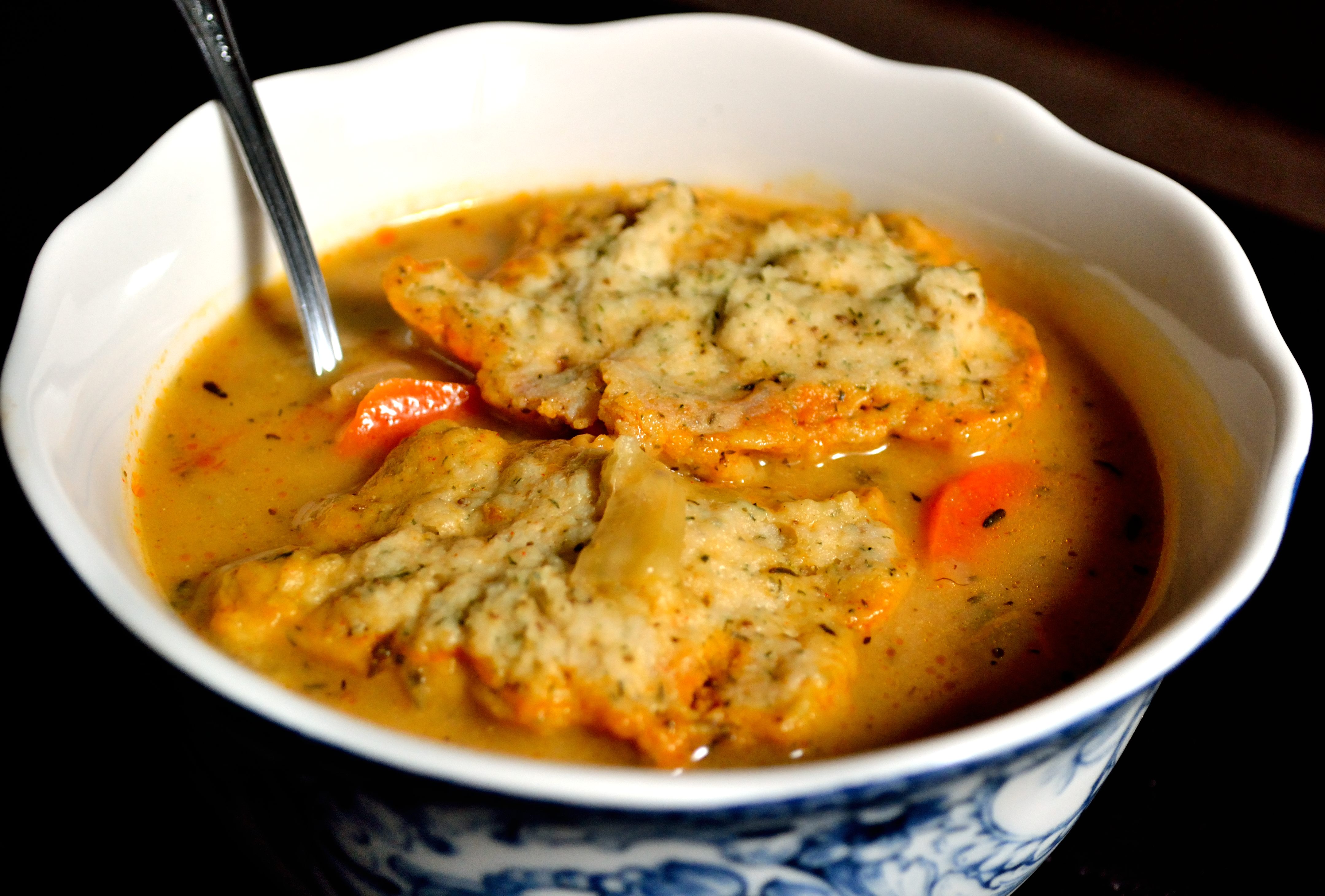
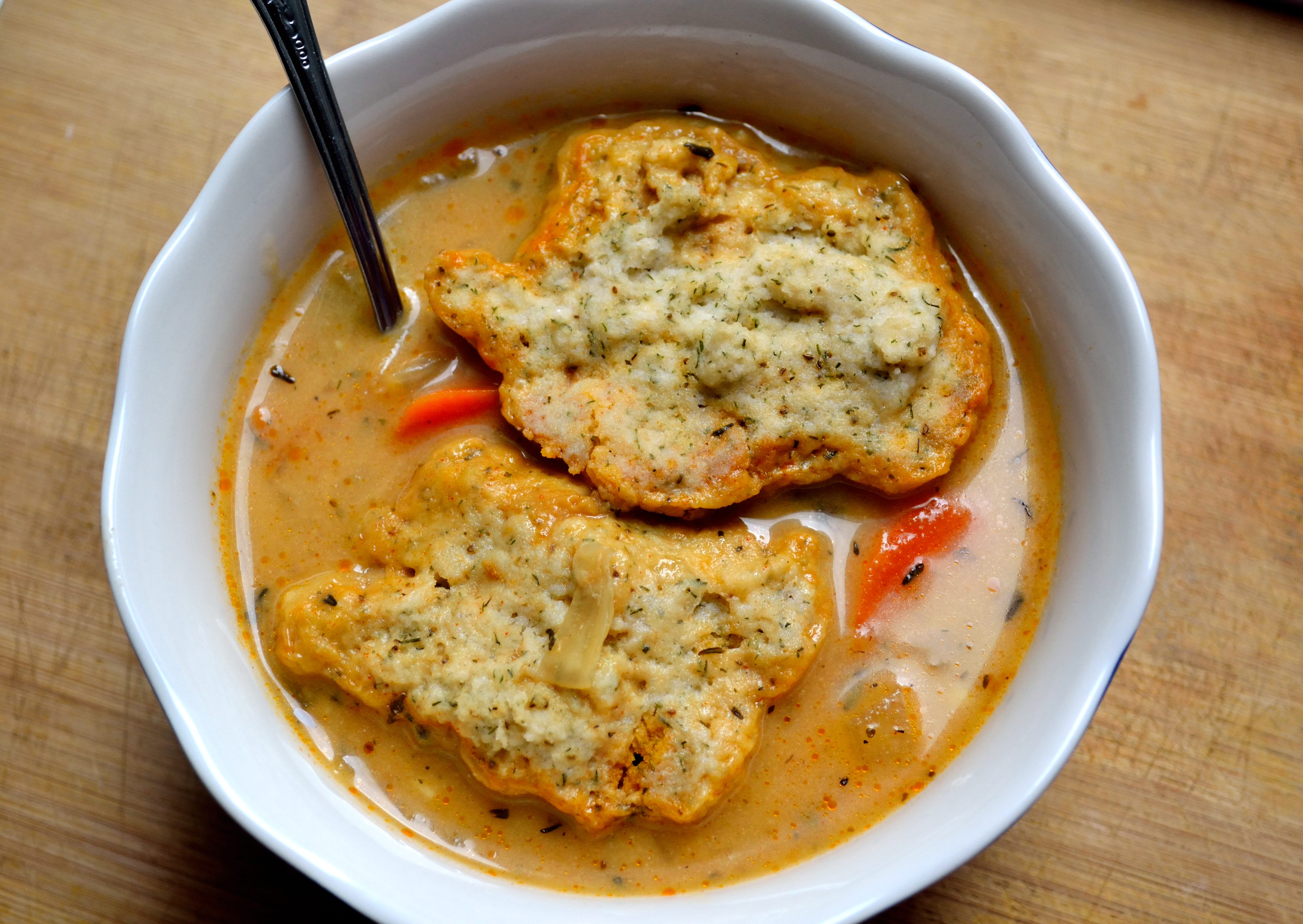
Road trips for our family often included a stop at the Cracker Barrel.  It was awesome because not only was it a restaurant but an old-timey store too with things like penny candy and old fashioned toys.  Whenever we went to the Cracker Barrel I would get two things, stick candy (tutti-fruitti and root beer) and chicken and dumplings.  I loved the chicken and dumplings, the creamy gravy and the soft doughy dumplings were my idea of comfort.  It’s been a long time since I have had that dish but last winter I got a craving for those dumplings and wanted to try and create something similar but a lot healthier.  Long story short, this dumpling soup is NOTHING like the Cracker Barrel chicken and dumplings.  But I don’t count this recipe as a total failure because I ended up with a really delicious, warming, and comforting soup.  This is a perfect cold day meal and it doesn’t take too much effort to put together.  While I’ve left out chicken and added beans, you can easily add in cooked chicken to this soup.

Dumpling Soup

DSC_0597

For the soup

  • olive oil
  • 1 medium onion, diced
  • 4 cloves garlic, minced
  • 3 to 4 large carrots, peeled and sliced into coins
  • 5 to 6 stalks celery, diced
  • 2 tsp fresh thyme or 1 tsp dried
  • 2 bay leaves
  • 1/2 cup nutritional yeast (optional but adds a nice cheesy flavor)
  • 1 1/2 cups white beans, dried and cooked or canned
  • 1 to 2 tbsp brown rice flour, divided (you could also use coconut or whole wheat flour if not gluten-free)
  • 5 cups water
  • 1/2 tsp smoked paprika
  • salt and pepper

For the dumplings

  • 3/4 cup brown rice flour
  • 1 tsp baking powder
  • 1/2 tsp salt
  • 3/4 tsp dill weed or other favorite seasoning
  • 1/2 cup milk (I used almond)


1. In a large soup pot or dutch oven, heat olive oil over medium high heat.  Saute onion, carrots, and celery until lightly brown.  Add in garlic and saute for 1 more minute.  Stir in thyme and sprinkle vegetables with a tablespoon of brown rice flour.  If all your vegetables aren’t coated add another tablespoon of flour.  Add in beans, nutritional yeast if using, and water.  Make sure you have enough water to cover the vegetables and chickpeas.  Add in paprika, salt and pepper, and bay leaves and stir to combine.  Bring to a boil and then lower to a simmer and cover.

2.  While your soup is simmering, whisk together all the dry ingredients for the dumplings.  Add in the 1/2 cup of milk and stir to combine.  Let the dough sit for 10 minutes.

3.  Uncover the soup and drop spoonfuls of the dumpling dough into the soup.  Once the batter is gone, cover the sip with a lid and leave for 20 minutes.  DON’T lift the lid during this time to check the dumplings because that will lengthen your cook time.  At the end of the 20 minutes uncover and check dumplings.  They should be fluffy and a little brown around the edges.  If some of the dumplings have fused together just break apart with a wooden spoon.

4. Ladle both dumplings and the soup into bowls and enjoy!

DSC_0591


The dumplings and flour help make a wonderfully thick and creamy soup.  While I didn’t get exactly the recipe I was looking for, I got a really yummy soup that is perfect for the cold weather that is coming.  This is also a really good soup to share with a group of people.  Perfect for family gatherings in front of the fire.  Isn’t that a cozy picture?  Have a great weekend everyone and see you on Monday!


How To Grocery Shop For Health

t1larg.grocery.store.aisleIf you are the regular grocery shopper for your family, you probably have your routine down pat.  You know exactly where to go, what to get, and what aisle everything is in.  I know for me, I can pretty much grocery shop on autopilot and get everything I need in less than 30 minutes.  But when you decide to make a big change in the way you eat, the grocery store suddenly turns into unknown territory.  You’re now hunting the aisle for foreign ingredients and wondering whether lacinato kale and curly kale are all that different from each other.  It can be frustrating to try and navigate your store and have no clue what to buy.  I thought that I would share a few tips from my own grocery shopping routine to help you get in and out quickly and healthfully!

Plan Meals First

I always start my grocery list with a menu.  During the week, I stick to simple meals that stay generally the same, I just change the flavors/seasonings based on what I have on hand.  I save my new or more complicated meals for the weekend when I have more time.  Once I have a menu written out, I can add the ingredients I don’t have in my kitchen to my list.  This way you aren’t left wondering what ingredients that meatloaf dish needs while your standing in the grocery aisle.  Meal planning is also a great way to start eating better.  When you have a plan, you can stick to what you need and steer clear of the impulse buy in the chip aisle.

Use this template to plan and write out your list. Or find another one you like better online!

Use this template to plan and write out your list. Or find another one you like better online!

Change Your Route

Speaking of the chip aisle, wave good-bye.  You probably have a specific route you take through your store and probably include a few less than healthy aisles.  If you want to start eating better, I suggest changing your route.  I personally like to start in the produce aisle.  I fill my cart with all of the fruits and vegetables I will need for the week and then I move on to the other items I need in the store.  I also don’t wander up and down each aisle, I go to the specific ones I need and avoid the temptation of the less than stellar aisles.  For me this includes the aisles for tea/coffee, canned goods for diced tomatoes/tomato paste/tomato sauce, dried goods like rice and beans, and the frozen foods section for fruits and vegetables.  While there are healthy things in the aisles of your store, your best bet is the produce section and the frozen food aisles.  However you choose to eat, make sure you are shopping for those things and try to avoid the food aisles that have nothing you need.

grocery_large

Consider Multiple Trips

I know this might not be a popular tip for everyone, but consider making more than one trip to your grocery store or going to multiple stores.  I do this for two reasons.  One, I am fairly frugal with my grocery budget and I want to make sure that I am getting the most for my money.  There are some stores that have better deals on food that I buy regularly and it is worth it to me to go to a few different places.  My rotation of stores right now is Jewel, Aldi, and Whole Foods.  Between those three I am able to get good prices on all of my food and eat healthy on a budget.  The second reason I suggest multiple trips is that stores stock their products at different times of the day/week.  I try to get to the store on the days/times that they restock the produce so I can get the best pick.  Also multiple trips tend to save you money because you can buy only what you need instead of overstocking because you only go once.  Again, I know that some of you are too busy for multiple trips during the week, but give it a try and see if it works for you.

Just Ask

If you’re totally changing the way you eat, chances are there are going to be some food items that you are unfamiliar with.  Rather than just wandering around and getting frustrated, ask a worker.  I have found that most of the time they are happy to help and it cuts down on wasted time to just ask someone for help.  Plus if you get a really great employee, they can help you with how to prepare and eat that ingredient.  So don’t be afraid to ask!

Grocery shopping is a vital part of eating well and it is disheartening when you feel lost.  It can feel easier to just give up and go back to your old habits because you know what to do.  Don’t give into the temptation and slip back to your old ways, try these tips and give yourself some time to get used to your new way of eating.  Soon you will be flying through the store with ease and will be on your way to eating a healthy meal!

Grocery-Store-Organic-Produce

Our Food

OB-SZ379_veg_E_20120516180914I came across this post about a woman from Nigeria coming to the United States for school and trying to learn how to eat well.  I found it fascinating because it really shows how different our food system is compared to the rest of the world.  While the whole post is really good, there were a few points that stuck out that I wanted to address here on my blog.

The first was how she learned to view food in Nigeria.  In her house, they called junk food simply junk because that is exactly what it was.  This is a simple idea but I feel like it is really substantial.  Food is meant to nourish our bodies and give us fuel.  It provides necessary nutrients, vitamins, and minerals that allow us to function properly.  Therefore anything that doesn’t meet those standards shouldn’t even be called food.  Just what are we teaching young kids when we call candy, chips, soda, or any packaged product food when we qualify it as junk?  We are telling them that it is in some way allowing our bodies to work the way they should and that isn’t what happens with Pop-Tarts and Oreos.  It should be no surprise that we are confused about what food is healthy when we teach them that packaged and processed food can be part of a “balanced” diet.

We are spending more money on eating out than cooking at home.

We are spending more money on eating out than cooking at home.

The other reason that so many of us have a hard time eating well is that we are constantly sold on food advertising.  We love our buzzwords like ‘all natural’ ‘organic’ ‘gluten-free’ and ‘locally sourced’. These words mean virtually nothing when it comes to whether we should eat something or not.  Yes, organic and gluten-free are regulated terms but that doesn’t necessarily mean it’s healthy.  Organic candy is still candy.  In the article, the author writes about being confused by all these words stating, “Wasn’t food by definition healthy?  If the food wasn’t healthy, then why call it food?”  Great question!  It’s so simple, yet we have complicated it so much by relying on convenience foods.  We need a package to tell us what is healthy to eat instead of just eating food that needs no advertising.  You don’t have to wonder if a bunch of broccoli or a bushel of apples is good for you.  Real food will always trump processed food.

When she came to the United States, the author was in good health.  She never worried about her weight and had no other complaints.  After awhile, she started to experience so many of the complications that come with a Western diet, even though she was trying to eat as close to what she grew up with as she could.  After going to her doctor and doing some searching they realized all the pesticides and chemicals used to treat the food we normally eat, was causing her ailments.  Her doctor stated that it was really common for immigrants to experience these problems when they come here.  This made me realize two things.  One, we really need to work on growing food that doesn’t need to be treated so much just to reach our tables.  I won’t claim to have the answer to that problem, but I do think it starts with us as the consumer.  Our money talks and by placing our money in food systems that are sustainably and thoughtfully grown, we can start to change the tides.  I know that this won’t happen overnight and that it is tough to buy all organic all the time (I don’t have the money to do that either), but we have to start somewhere.  The second thing it made me realize is that we shouldn’t all eat the exact same diet.  I am a firm believer in what works for me might not work for you when it comes to eating.  The microbes that digest our food are all different.  Hence, an immigrant from Nigeria is going to have a hard time digesting the food we eat here just like I would probably have a difficult time digesting the food they regularly eat in Nigeria.  It’s ok to not have a cookie cutter diet and eat what “everyone else is eating”.  You need to find what works for you and stick with that no matter what your neighbor is eating.  Respect your body and it will serve you well.

quote-Robert-Atkins-nobody-had-ever-told-me-junk-food-115182

There are a lot of great talking/thinking points in this article, like the fact that in most other countries packaged food is way more expensive than regular food and only the really wealthy can afford to purchase it.  Yet it is the exact opposite here.  Packaged food is cheap and easily accessible while it costs a fortune to buy organic food.  While it is still possible to eat well on a budget, it is a little more difficult.  I also really like the authors simple rules to eating well here in the states.  Buy food that you know where it came from, avoid packaged food as much as possible, and cook your own food.  We don’t have to make being healthy a complicated process, simple steps such as these can make a huge difference in your health.

Try changing some things in your diet and see how much better you can feel.  Check out some of my other posts on eating well or making small changes, and start making a difference today.  You can do it!

eat-whole-drink-water-quote

How To Stock Your Kitchen

For some of you, eating healthier is a whole new ball game.  You’ve never done it before and now you’re wondering what to buy at the grocery store and what to keep on hand in your kitchen.  You were used to shopping and eating one way and now that needs to change.  You can’t continue buying junk food and expect to lose weight or be healthy.  But what do you buy?  What are things that “healthy” people fill their pantries and fridges with?  I am going to share four simple things that I always keep around and are easy to incorporate into meals for healthy dishes.

Fruits and Vegetables

DSC_0211

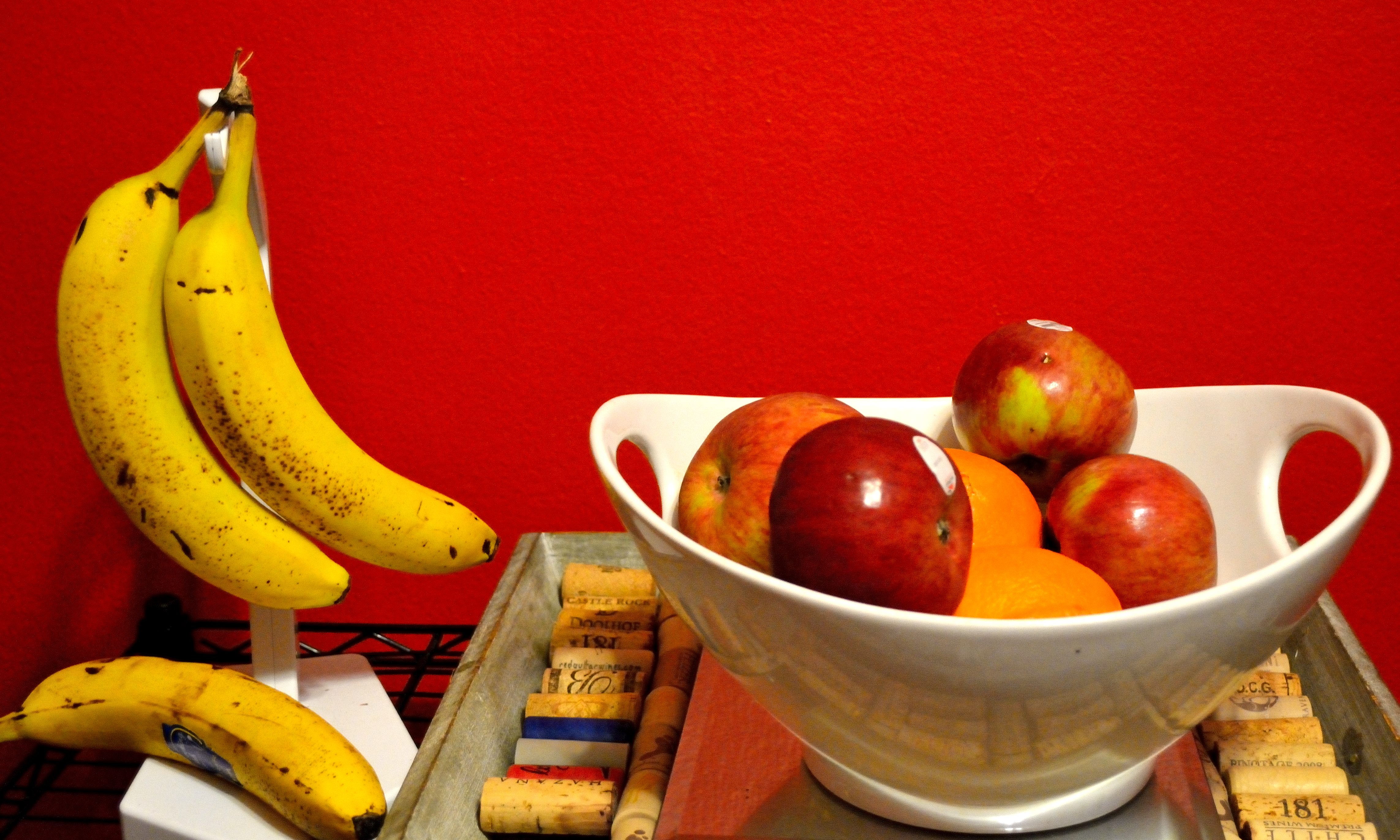
Let’s just start with the obvious one and get it out of the way.  Yes, I always have fruits and vegetables in my kitchen.  For the most part I buy what’s in season because it’s cheaper and tastes better, but I also buy carrots, bananas, frozen vegetables, and potatoes year round.  If you want to eat better, start adding more of these foods into your meals.  Your mother was right, eat your vegetables because they’re good for you!

Grains and Beans

DSC_0212

At the moment I have a variety of beans, including chickpeas, pinto, black-eyed peas, and split peas, on my shelf.  I also have two kinds of oatmeal, millet, quinoa, brown rice, pasta, popcorn, and polenta.  All of these are great add ins to many meals as well as a food foundation to top with sauces, vegetables, meat, and more.  Most of the grains that I keep on hand are very easy and quick to cook so they can be made for a tasty week night meal.  I like the taste and texture of dried beans better than canned, but they do take longer to prepare because you have to soak them to cook them.  If you don’t have the time to do that, there are plenty of good brands of canned beans.  Just make sure to read the ingredient list and rinse them well before you use them.  The other reason that I like having a plethora of beans and grains on hand is that they are cheap.  I buy all of these things from the bulk bins at Whole Foods and most are less than $2 a pound.  If you don’t have a store with a bulk section these foods are still cheap.  You can get a one pound bag of lentils or brown rice for .99 cents!  That is some good and cheap eats.

Canned Goods

DSC_0210

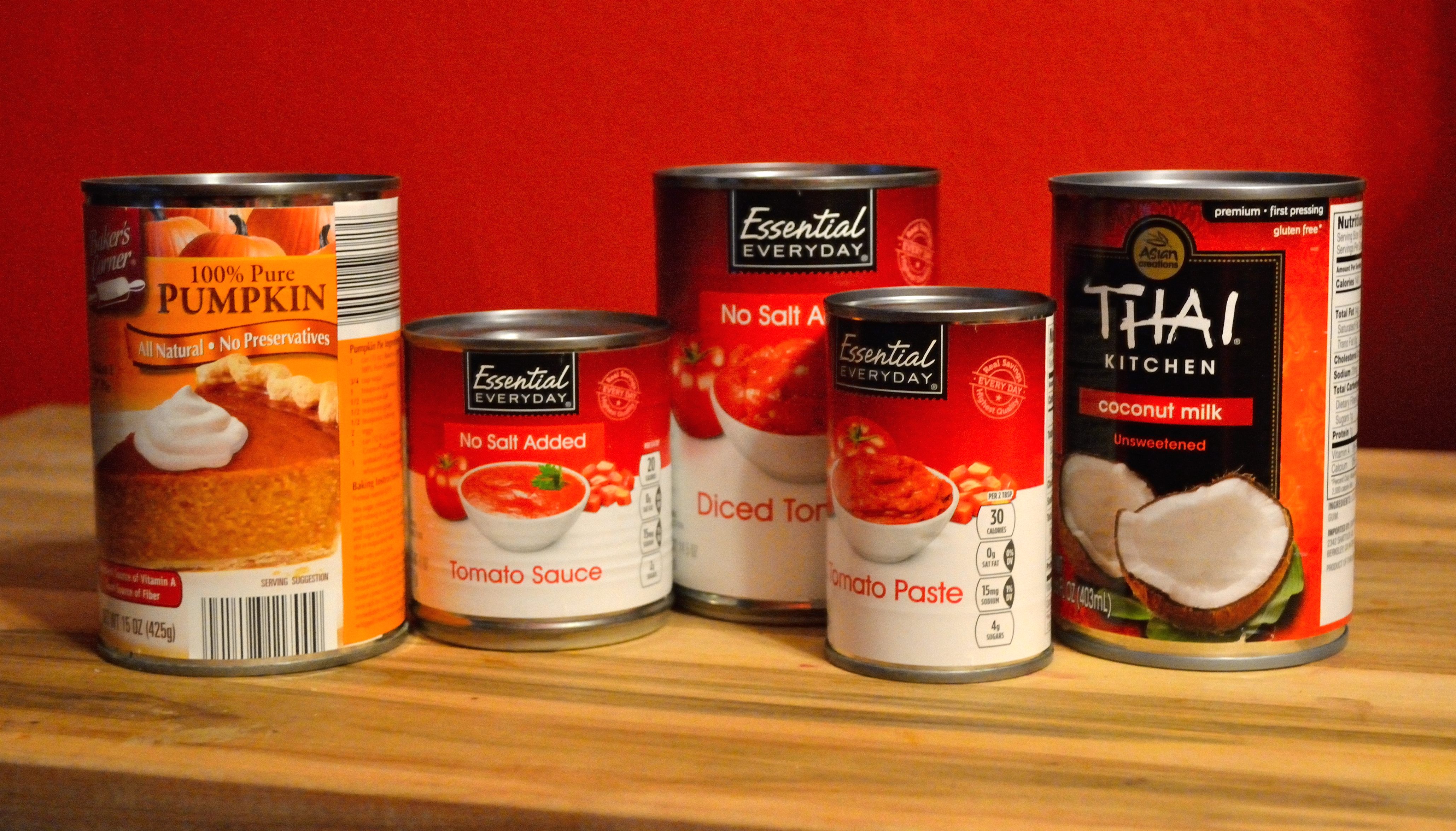
I always have at least one can of tomato paste, tomato sauce, and diced tomatoes on my pantry shelf.  These can be used for stews, soups, sauces, toppings for meatloaf, salsa, or anything else that you can think of for tomatoes.  I buy the no sodium added kind and make sure that there is nothing but tomatoes on the ingredient list.  These are also pretty cheap because I buy the store brand at Jewel.  One other canned good that I usually have on hand is full fat coconut milk and pumpkin.  Again these can be used in so many dishes, from sweet to savory and can be found for fairly cheap prices if you look around.

Herbs and Spices

DSC_0213

I have a huge herb and spice collection and it is bound to get bigger.  I love making my own blends, like taco seasoning, and trying out new flavors in dishes.  Herbs and spices are a very important part of my cooking because they help take food to the next level.  Many people complain that healthy food is bland and boring, but it doesn’t have to be if you have a handful of spices around.  Try classics like oregano and basil, or branch out with spices like curry or garam masala or berbere or harissa.  Experiment with different flavors and find ones that you like the best and kick up your meals a notch.  I’m fortunate to live in Chicago near The Spice House and buy most of my seasonings there, but Whole Foods sells theirs in bulk as well and many grocery stores have a large and good selection.  As with any food though make sure you read the labels because some companies add in chemicals to keep the spices from clumping in transit.

There you have it.  Four staples of the Dawson household.  I use these things on a daily basis to create healthy meals and they are a good starting point for stocking a healthy kitchen.  Of course I have more than just this food in my house, but I would say that most meals that I make are based on or incorporate these foods.  Don’t feel overwhelmed if you are just starting out.  Build your healthy kitchen slowly and find things that you enjoy and will use regularly.  There is no wrong way to create your own healthy stock of food!